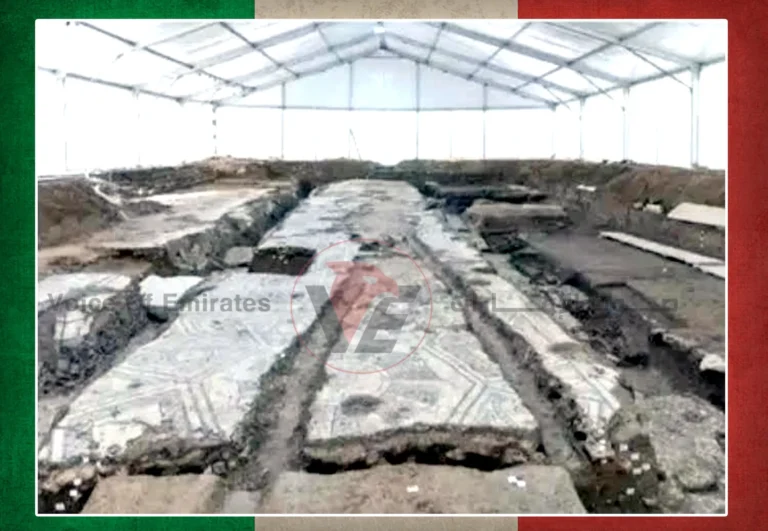
Rome, Italy – Archaeological excavations in an Italian city have unearthed the remains of a 4th-century Christian church.
Researchers describe the discovery as shedding light on the early stages of Christianity’s spread in the Italian peninsula.
Furthermore, it adds new details to the evolution of religious architecture during that era.
The archaeological team explained that the church was found buried beneath more recent buildings.
It contains fragments of walls and floors, along with architectural remains
indicating that it was an important religious center.
It appears to have served the local community around 1,600 years ago.
Architectural style and additions
Researchers noted that the building’s design reflects the architectural style prevalent in the early Christian era.
The church contained a main hall for worship, along with architectural
additions likely used for religious rites and church meetings.
Archaeologists unearthed a number of artifacts, including pottery fragments,
ancient coins, and decorative remnants.
This discovery helps to accurately date the site and understand
the nature of religious and social life during that period.
The spread of Christianity in Italy
Experts confirmed that the discovery provides new evidence of the spread of Christianity in Italy during the 4th century AD.
This period witnessed a significant transformation following the official recognition of Christianity within the Roman Empire.
The excavation team continues its work at the site, hoping to uncover additional parts of the church or adjacent buildings.
Experts also anticipate that the new findings will contribute to a clearer picture of the city’s history
and its religious and cultural development over the centuries.