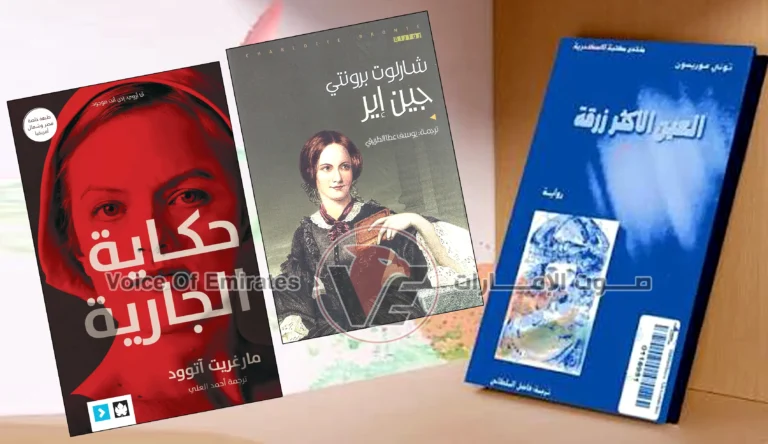
- Jane Eyre – Charlotte Brontë (1847)
- Wuthering Heights – Emily Brontë (1847)
- Uncle Tom’s Cabin – Harriet Beecher Stowe (1852)
- Private Room – Virginia Woolf (1929)
- The Bluest Eye – Toni Morrison (1970)
- The Golden Notebook – Doris Lessing (1962)
- The Color Purple – Alice Walker (1982)
- The Handmaid’s Tale – Margaret Atwood (1985)
- Beloved – Toni Morrison (1987)
- The Beloved Mother – Elena Ferrante (2011)
- The Gone Girl – Gillian Flynn (2012)
London, UK – For many women novels, writing has been more than just a means of expression; it has been a battle against social constraints, censorship, and prevailing ideas.
Over the past decades, novels written by women have sparked controversy
and brought about significant shifts in the literary landscape.
Some of these novels faced bans, persecution,
and harsh criticism, yet over time, they have become timeless works studied in universities
and considered among the most important classics of world literature.
Here are 11 novels that have left an indelible mark on literary history
and have transcended the boundaries of time and culture.
Jane Eyre – Charlotte Brontë (1847)
Charlotte Brontë presented an independent heroine who refused to submit to social constraints, a bold proposition at the time.
Despite initial criticism, the novel later became one of the most prominent and influential English novels.
Wuthering Heights – Emily Brontë (1847)
The novel caused widespread shock due to its complex characters and gloomy atmosphere,
but over time it has become one of the greatest romantic and psychological novels in world literature.
Uncle Tom’s Cabin – Harriet Beecher Stowe (1852)
The novel played a prominent role in exposing the horrors of slavery
within the United States, and sparked widespread political and social debate.
Historians even consider it one of the most influential books in American history.
Private Room – Virginia Woolf (1929)
Although it is a work that combines essay and literary narrative,
it has become a fundamental reference in feminist literature.
Woolf championed women’s right to education, creativity, and intellectual independence.
The Bluest Eye – Toni Morrison (1970)
The novel addressed issues of racism, beauty standards, and identity,
and was banned in some schools and libraries due to its sensitive themes.
Nevertheless, it later became one of the most important works of modern American literature.
The Golden Notebook – Doris Lessing (1962)
The novel addressed issues of women, politics, and psychological freedom in
an unconventional style, sparking widespread controversy upon its publication,
before becoming one of the most important novels of the twentieth century.
The Color Purple – Alice Walker (1982)
The novel addressed racial discrimination and violence against women,
and faced repeated attempts at censorship. However, it won the Pulitzer Prize
and became a popular literary and cinematic work.
The Handmaid’s Tale – Margaret Atwood (1985)
The novel imagined a future in which women are reduced to mere
instruments of reproduction within a totalitarian regime.
It became a global symbol of the debate surrounding freedoms and women’s rights,
and remains one of the most widely read books to this day.
Beloved – Toni Morrison (1987)
The novel, based on historical events about slavery, won the Pulitzer Prize and is considered
one of the most important works to address the effects of slavery on individuals and society.
The Beloved Mother – Elena Ferrante (2011)
The Italian writer achieved international success through her works
that explored human relationships and the complexities of society.
She became one of the most prominent contemporary literary voices
despite maintaining her anonymity for years.
The Gone Girl – Gillian Flynn (2012)
The novel redefined psychological thriller literature and achieved massive sales
worldwide before being adapted into a successful film,
confirming women writers’ ability to lead the most popular literary genres.
These works affirm that women’s literature has never been marginal,
but rather has played a pivotal role in changing social and cultural perceptions
and opening new horizons for generations of writers and readers.
Despite the censorship or rejection some of these novels faced in their early days, time has vindicated them.
Today, they stand as among the most important and influential classics of world literature.