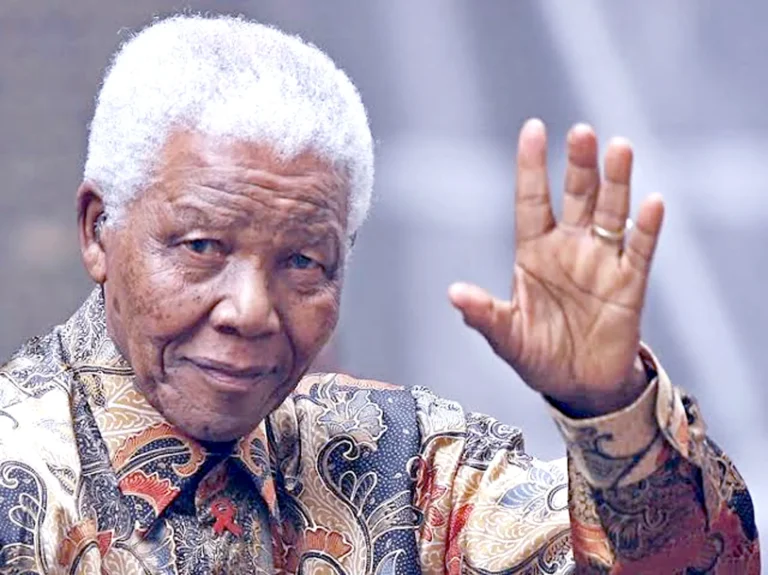
Johannesburg, South Africa – The legacy of the late South African leader Nelson Mandela extends far beyond politics and the struggle for freedom, reaching into the world of literature and writing.
He left behind a body of work documenting his personal experiences and contributed to children’s literature,
aiming to instill values of tolerance, justice, and equality in future generations.
Mandela is considered one of the world’s most prominent figures
who successfully transformed his personal experiences,
including his long years of imprisonment, into a source of intellectual and literary inspiration.
He used writing as a vehicle to convey his ideas and messages to the world.
The struggle against the apartheid regime
One of his most famous works is “Long Walk to Freedom,” his autobiography published in 1994.
In it, he recounts his life from childhood, through his struggle against apartheid, to his 27 years of imprisonment.
He was later elected as South Africa’s first Black president. The memoir became one of the most widely
read autobiographies in the world and was adapted into a highly acclaimed film.
He later published “Conversations with Myself,” a collection of personal letters, diaries, speeches,
and notebooks written by Mandela at various stages of his life.
These included texts he wrote while imprisoned, allowing readers to discover more human
and personal aspects of his life, far removed from his image as a political leader.

Supporting and distributing stories and books aimed at young children
Mandela did not neglect children, supporting and distributing stories and books
for young readers that emphasized tolerance, respect for others, and the importance of education.
He did this based on his belief that building a better future begins
with raising new generations on the principles of justice and peace.
Nelson Mandela writings continue to be read around the world,
not merely as historical accounts, but as inspiring human testimonies.
They reflect the journey of a man who transformed suffering into
a message of hope and left behind a literary legacy no less impactful than his political one.