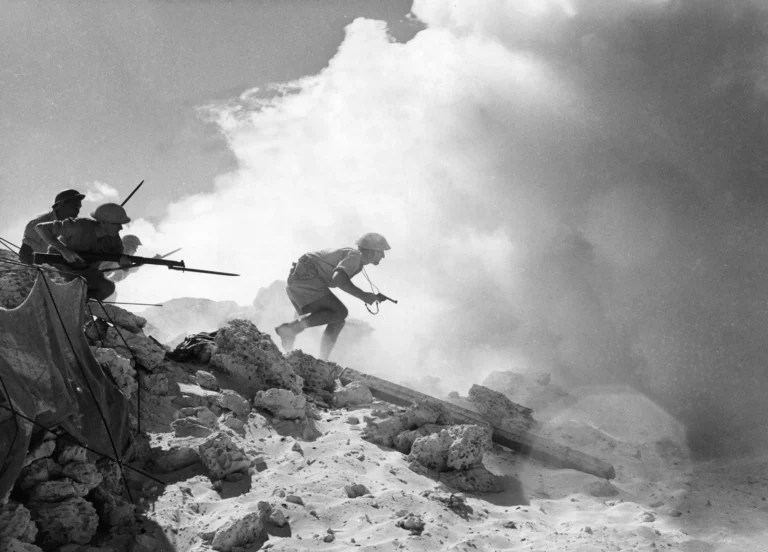
El Alamein, Egypt – The anniversary of the First Battle of El Alamein, which erupted on July 1, 1942, recalls one of the most significant episodes of the Second World War. The Egyptian Western Desert was transformed into a theater for a decisive military confrontation between Allied and Axis forces, a conflict in which Egyptians bore grave humanitarian, economic, and military consequences despite not being a party to the decision to initiate it.
The Battle Context and Strategic Location
This battle followed the advance of Axis forces, led by German Field Marshal Erwin Rommel, nicknamed the “Desert Fox,” into Egyptian territory following a series of victories in North Africa. The forces halted at the El Alamein area, which gained strategic importance due to its unique geographical location between the Mediterranean coast and the Qattara Depression; this terrain limited maneuverability and forced a direct confrontation.
A Strategic Turning Point
Allied forces, led by British General Claude Auchinleck, succeeded in halting the German advance toward Alexandria and the Suez Canal. This success was considered a pivotal turning point that prevented one of the world’s most important waterways from falling under the control of Axis forces.
The Cost of War on Egyptian Society
Although the warring parties were foreign armies, Egyptians paid a heavy price for the war; vast areas of the Western Desert were devastated, thousands of residents were forced to flee, and trade and supply movements were severely affected. Residents also suffered from an acute shortage of basic goods and rising prices, in addition to the proliferation of minefields that posed a constant danger for several decades.
The Legacy of Mines and Development Challenges
The mines left behind by the El Alamein battles remain one of the region’s greatest challenges; estimates indicate that millions of mines and unexploded ordnances remain buried in the Western Desert. This contamination has hindered the development of vast agricultural and tourism lands and has resulted in many casualties over the years.
Historical Heritage and National Memory
The First Battle of El Alamein is considered a precursor to the second battle that took place in October 1942, which ended in a decisive victory for the Allied forces, an event historians view as a major turning point that paved the way for the liberation of North Africa. Today, the city of El Alamein remains a witness to that era through cemeteries, monuments, and military museums. Egyptians continue to remember the period during which they bore the burdens of a global war they did not initiate, but paid for with their land, resources, and the future of their regions for long decades.