London – United Kingdom — The world-renowned “Big Ben” in the British capital, London, has once again captured global attention. It has stepped back into the international spotlight as it resumes its precise mechanical operations and rhythmic, historic chimes. This thunderous return revives the memory of one of the most celebrated and pivotal timepieces in human history. It is an icon tightly woven into Great Britain’s political fabric, cultural identity, and imperial legacy for over a century and a half.
The 13-Ton Bell and the Historic Era of Ash
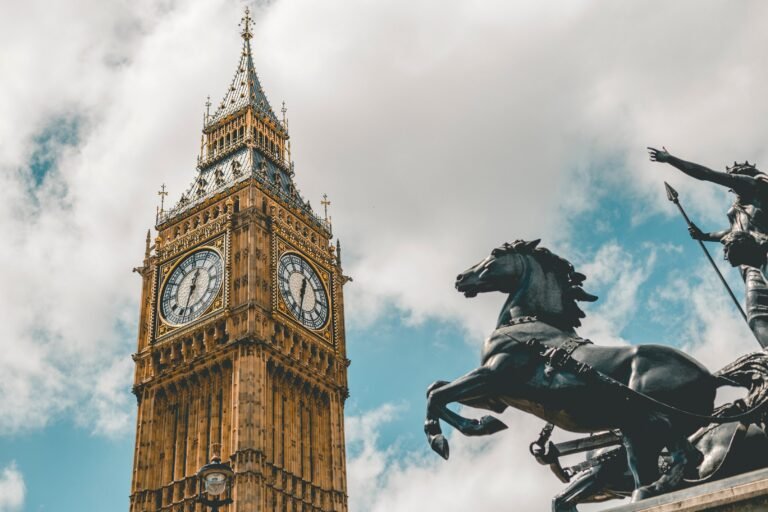
“Big Ben”—the universally recognized moniker designated historically for the massive bronze hour bell housed within the majestic “Elizabeth Tower” at the Houses of Parliament (the Palace of Westminster)—stands as one of the premier sovereign and tourist landmarks in the United Kingdom. Millions of travelers from across the globe converge on the site annually to admire its exquisite Gothic Revival craftsmanship. Tourists also listen to its resonant, distinctive chimes. Over the decades, these chimes have transformed into an absolute global symbol of time, precision, and institutional discipline.
The engineering and construction of the clock tower and its intricate mechanical core commenced in the mid-19th century. It rose from the ashes of the catastrophic Great Fire of 1834 that devastated a vast sector of the original medieval Palace of Westminster. Technical installation and fine calibration were finalized in 1859. This launched an uninterrupted chronological journey that established it as the world’s most trusted and famous gauge of time. While popular vernacular uses “Big Ben” to describe the external framework of the clock or the tower in its entirety, archival records dictate that the name strictly belongs to the great internal bell. In fact, this colossal instrument weighs over 13 tons and generates the deep acoustic frequencies that resonate across London. Its sound is broadcast via international networks during state functions, national holidays, and New Year celebrations.
The Grand Heritage Restoration and Enduring Political Symbolism
Over the past decades, the clock’s structural geometry, heavy gear trains, and delicate stained-glass dials have undergone multiple complex structural and metallurgical restorations to preserve its historical accuracy against environmental erosion. Chief among these was the monumental, multi-year conservation project completed recently. This project successfully stripped away layers of pollution to restore its original paint and gilding. At the same time, it seamlessly integrated micro-technical upgrades to protect the internal gear movements without compromising its landmark architectural value.
Cultural historians and political analysts assert that Big Ben persists within the collective consciousness as far more than a mere device for measuring time. Through its sovereign stature, it has evolved into a political and cultural anchor representing the continuity and institutional resilience of the British State. Furthermore, it serves as a silent lithic witness to macro-geopolitical transitions and monumental historical milestones. These range from the devastating wreckage of the World Wars to the modern political realignments of the 21st century. Its revived chimes echo as a definitive statement that heritage remains unshakable against the shifting tides of time.