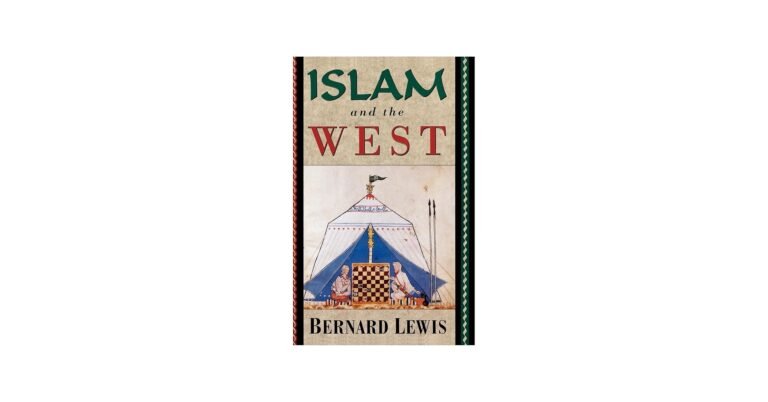
London – United Kingdom — The late British-American historian and Orientalist Bernard Lewis is widely categorized as one of the most controversial Western scholars in the structural study of Middle Eastern history and the Islamic world. Throughout his extensive career, Lewis etched a profound and far-reaching intellectual footprint via a dense catalogue of literature and research checking the root causes of political, economic, and cultural crises in the region and its volatile historical interaction with the West.
The Attrition of Civilization and the Internal Challenges Hypothesis
Lewis gained global prominence by floating highly problematic, deep-rooted inquiries regarding the structural causes behind the decline and stagnation experienced by Islamic civilization relative to the rapid technological and scientific leaps executed by Western societies in recent centuries. In his core doctrines, Lewis argued that the modern Middle Eastern crisis cannot be attributed solely to external dynamics or Western colonial expansion. Instead, he posited that it is deeply fed by chronic, internal systemic failures embedded within the political, social, and cultural frameworks of Islamic societies, which obstructed modernization vectors.
His theories and paradigms triggered fierce academic standoffs and polarized intellectual friction between supporters and detractors alike. His advocates and pupils maintained that Lewis delivered a bold, objective, and deconstructive reading of history that facilitated a clearer auditing of the massive geopolitical shifts shaping the Middle East. Conversely, his critics—comprising prominent Eastern and Western thinkers—accused him of harboring reductionist, biased Orientalist perspectives reflecting a traditional Western hegemony over the region, which frequently served to legitimize Western military and political intervention in sovereign regional assets.
A Prolific Academic Trajectory and Authoritative Reference Literatures
Across a distinguished academic career spanning multiple decades, Lewis authored numerous foundational texts and granular studies detailing Islamic history, the architecture of the Ottoman Empire, the disintegration of the Caliphate, and the general engineering of East-West relations. Over time, he morphed into a highly influential ideological reference point and an authoritative advisor within Western foreign policy establishments, particularly inside Washington and London decision-making apparatuses.
Furthermore, his name became systematically fused to critical strategic debates regarding the future of the Middle East. His analytical briefs were frequently cited during high-level conventions addressing political reform, democratization pathways, the rise of political Islam and ideological currents, and the existential vulnerabilities facing regional states amid an accelerating global polarity and shifting international systems.
An Enduring Intellectual Echo Beyond His Passing
Despite his passing, the theories and analytical frameworks of Bernard Lewis remain heavily active, asserting their relevance across contemporary academic circles, sovereign think-tanks, and global research institutions. The scholarly debate over his interpretations of Islamic history and the structural elements of modern crises continues without interruption, cementing his position as one of the most radically influential intellectual figures to have shaped the analytical architecture of Middle Eastern studies during the 20th and early 21st centuries.