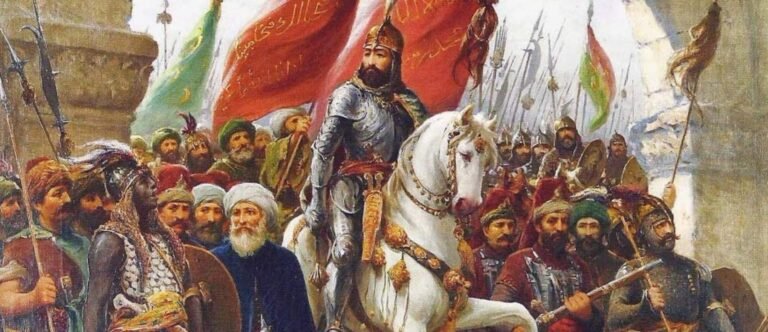
Istanbul, Turkey – The conquest of Constantinople by the Ottoman Sultan Mehmed the Conqueror in 1453 stands as one of the most pivotal turning points in world history. It was not merely a military victory that brought an end to the Byzantine Empire. Rather, it was a defining moment that redrew the political, economic, and cultural maps of the world for centuries to come. From his youth, Sultan Mehmed II harbored the dream of capturing the city. The city had resisted numerous armies and empires throughout history due to its formidable fortifications and unique strategic location bridging Asia and Europe.
Artillery Evolution and Breaching the Historic Walls
Sultan Mehmed relied on unprecedented military preparation to achieve his objective. He modernized the Ottoman army and reinforced the artillery division. Additionally, he deployed colossal cannons that revolutionized warfare methods of that era. These super-guns successfully breached the walls of Constantinople, which had stood for centuries as an unassailable symbol of strength. The young Sultan recognized that capturing the city would grant the Ottoman Empire immense leverage. As a result, the empire became a rising global superpower dominating vital maritime corridors.
Tactical Brilliance: Moving the Fleet Overland
Among the most astounding maneuvers that captivated historians was Mehmed’s tactic of transporting Ottoman warships overland across wooden planks greased with oil and fat to bypass the Golden Horn. This daring move completely circumvented the massive iron chains deployed by Byzantine forces to block the Ottoman fleet. This operation is widely regarded as one of the most ingenious and audacious tactics in the history of naval and land warfare. Following a prolonged siege and intense battles, Ottoman forces breached the city on May 29, 1453. This marked the dawn of a new era where Istanbul became the capital of the Ottoman Empire and an influential political and economic hub.
Global Repercussions and the Dawn of Geographical Exploration
The impact of the fall of Constantinople extended far beyond the Islamic world into Europe and the Americas. The shift in control over the city altered global trade routes. Consequently, European kingdoms sought alternative maritime pathways toward the East—a drive that subsequently catalyzed the Age of Discovery. The conquest also marked a profound cultural transformation. Sultan Mehmed actively rebuilt the city and transformed it into a global center for commerce, science, and arts. At the same time, he preserved its religious and cultural diversity. This cemented his legacy as one of the most brilliant military and political leaders in human history.