Makkah, Saudi Arabia – Over long centuries, Hajj seasons have faced massive health challenges due to the spread of pandemics and infectious diseases that swept through various regions of the world. Nevertheless, the Hajj pilgrimage remained one of the most prominent religious gatherings capable of enduring and adapting to exceptional circumstances throughout history. Since the early Islamic eras, Hajj seasons witnessed the outbreak of several dangerous epidemics. The most notable were the plague, cholera, and smallpox. In addition, long journeys and travel between countries also facilitated the rapid transmission of illnesses among pilgrims. These pilgrims arrived from different continents.
The Plague and Cholera: Successive Historical Crises
Historical sources indicate that the plague struck vast areas of the Islamic world during the eighth century AH. This caused a significant decline in the number of pilgrims. Some seasons recorded widespread fatalities due to the spread of diseases and the lack of medical capabilities at the time. In the nineteenth century, Hajj seasons suffered repeated health crises caused by cholera. The disease was transmitted via contaminated water and severe overcrowding. This prompted authorities in later periods to implement unprecedented health measures. For example, they established health quarantines. They also screened pilgrims before they entered the Holy Land.
Exceptional Measures and Smart Crowd Management in Modern Times
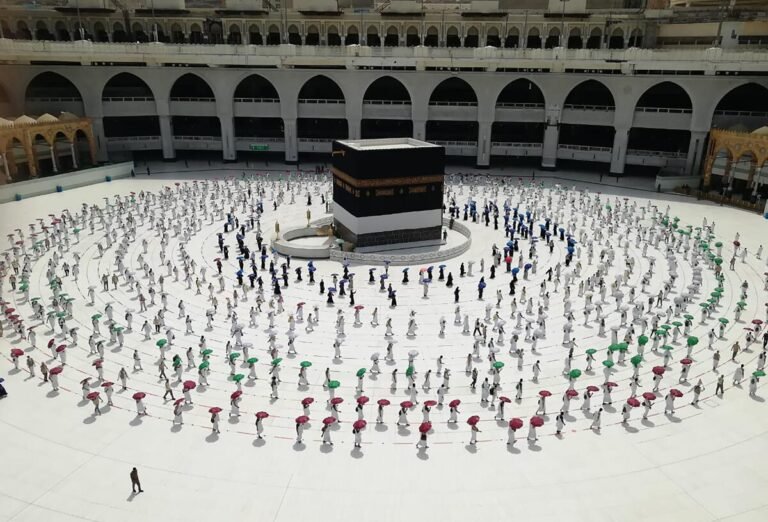
Islamic history has documented instances where certain Hajj journeys were halted or pilgrim numbers dropped significantly due to health conditions, wars, or natural disasters. However, the rituals never ceased completely except under extremely rare circumstances throughout history. During the COVID-19 pandemic, the world witnessed one of the most exceptional periods in modern Hajj history. The Saudi authorities enforced strict health protocols. These included downscaling the number of pilgrims, imposing social distancing, and organizing movement within the Holy Sites. They also relied heavily on technology and smart applications for crowd management. During that timeframe, the Kingdom successfully executed extensive health and organizational plans that helped perform the rituals under safe conditions. As a result, this was a feat observers considered a global model for managing mass gatherings during health crises.
Modern Medical Systems and Proactive Prevention
With the advancement of medicine and modern preventative methods, Hajj seasons today have become more capable of confronting health risks through vaccination campaigns, medical surveillance, and advanced facilities within the Holy Sites. In addition, there is continuous international cooperation between Saudi Arabia and Islamic nations to guarantee the safety of pilgrims. Specialists emphasize that the history of Hajj in the face of pandemics reflects the ability of Islamic nations to adapt to monumental challenges. They maintain a steadfast commitment to performing religious rituals. They do this while preserving human lives. As a result, this has made Hajj seasons a historical testament to human resilience against crises across eras.