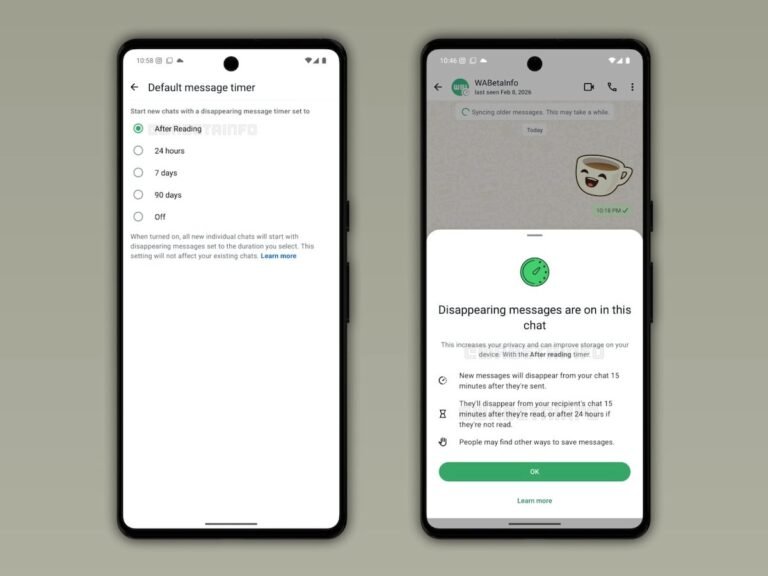
California, United States – WhatsApp continues to strengthen its suite of privacy tools by developing a new “Delete After Reading” feature. Marking a significant step forward in the concept of ephemeral messaging, this feature allows users to send content that automatically disappears once it is opened and read by the recipient. This update enhances personal data control within daily conversations. Moreover, it is part of a broader series of enhancements aimed at delivering elevated levels of security and privacy. This is particularly relevant as reliance on messaging apps grows for exchanging sensitive personal and professional information.
The Mechanism of Disappearing Content and Files
The core concept of “Delete After Reading” relies on a straightforward mechanism: making the message accessible exactly once. It cannot be reopened after viewing and vanishes entirely from the chat history of both parties. As a result, it minimizes the likelihood of accidental retention or unauthorized resharing. Technology experts view this move as a natural evolution of temporary messaging frameworks that initially launched with the “View Once” feature. However, it is now expanding to cover a wider spectrum of daily interactions. This includes photos, text messages, and short-term documents.
Balancing User Privacy with Digital Traceability
Modern communication application trends indicate a surging demand for temporary privacy features. This is driven by growing user anxieties over data leaks or unwanted archival of personal chats. Consequently, this shift is pushing tech giants to innovate more flexible solutions for governing the lifespan of digital content. Conversely, these features reignite ongoing debates surrounding the balance between robust privacy and legal traceability. While some maintain that ephemeral messages fortify user security, critics caution against potential misuse to conceal content that might hold weight in security or legal contexts.
Encryption and the Future of Digital Security Utilities
Despite these ongoing debates, WhatsApp continues to broaden its native privacy mechanisms, such as end-to-end encryption and visibility management parameters. This is in its bid to preserve its standing as one of the world’s most utilized messaging platforms. Industry observers emphasize that the “Delete After Reading” capability mirrors a sweeping tech-industry trajectory toward “vanishing media.” In this approach, regulating information longevity becomes an indispensable component of the contemporary digital user experience.