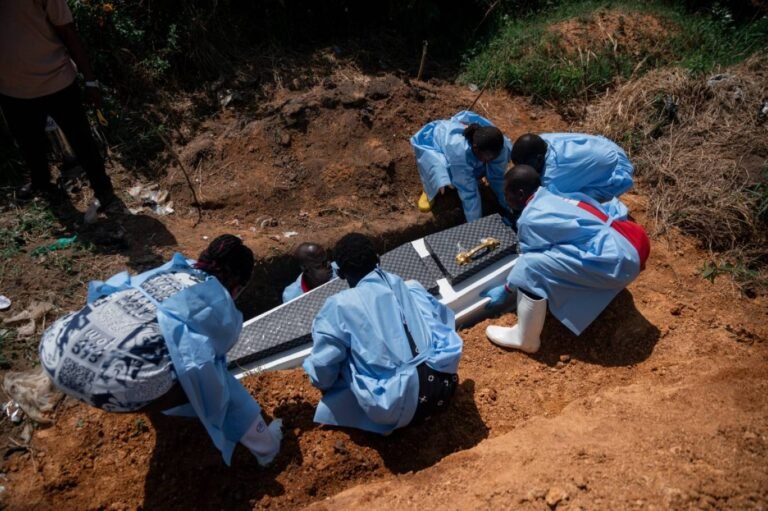
Kinshasa, Congo – The US Centers for Disease Control and Prevention (CDC) has confirmed that the current Ebola outbreak in the Democratic Republic of Congo is the largest ever recorded for the rare and deadly Bundibugyo strain.
Meanwhile, the humanitarian organization Oxfam issued a stark warning that the actual number of infections is far higher than the official figures. It also highlighted the near-total collapse of sanitation infrastructure and warned of a sharp decline in contact tracing efforts.
According to data from the Democratic Republic of Congo’s Ministry of Health, updated as of June 13, there have been 781 confirmed cases and 181 deaths. Adding to the severity of the situation is the lack of a globally licensed vaccine to combat the Bundibugyo strain. Therefore, clean water and sanitation become the primary, and perhaps only, line of defense against the epidemic.
A severe water crisis is engulfing relief facilities.
Field data from Oxfam in Ituri province, the epicenter of the outbreak, shows that only one in five health centers has access to clean water. In the town of Mongbualo, with a population of 140,000, 80% of residents lack access to safe drinking water. Furthermore, 75% lack sanitation facilities.
“Water, which is the absolute first line of defense in any health emergency, is simply not available,” said Manel Rebordosa, the organization’s field response coordinator in Ituri. “20 liters of water are being sold for two dollars, an amount beyond the means of families. Miners are returning home without washing their hands, spreading the virus to communities that are already suffering.”
A sharp decline in contact tracing due to funding shortages
Ribordosa pointed to a critical gap in disease surveillance, noting that contact tracing had dropped to just 43%, compared to 79% during the 2018 outbreak. He attributed this decline to reduced international funding and the withdrawal of US support for disease surveillance. Aid to the Democratic Republic of Congo has decreased by 46%, from $2.58 billion in 2024 to $1.4 billion in 2026.
The grim reality on the ground: The armed conflict has destroyed more than 70 health facilities, amid a severe shortage of medical personnel—only 0.2 doctors per 1,000 people.
In North Kivu province, deaths are occurring in homes before being identified as Ebola cases because families are resorting to self-care. This is accelerating the spread of the disease.
As a result of the reduced humanitarian outreach, panic ensued. An Oxfam coordinator confirmed that the absence of reliable communication teams allowed rumors to spread faster than the virus itself. Consequently, residents began to fear hospitals, viewing them as “death traps.”
In response to the crisis, Oxfam announced an expansion of its operations with an initial emergency intervention of $11.6 million over six months. This intervention aims to provide water and sanitation supplies to approximately 200,000 people in Ituri to save lives.