
- A Factual Claim Is Not an Opinion
- Open Doors for Global Media
- Thousands of Graduates, but Limited Representation in Leadership
- Who Reviews the Story Before It Reaches the World?
- Emiratisation Cannot Be Achieved Through Token Positions
- Privately Owned National Media Outside the Circle of Privilege
- Government Contracts as a Tool for Building a National Sector
- Responsibility in Return for Trust
- Partnership, Not Dependency
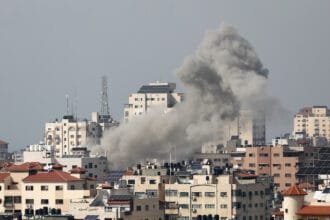
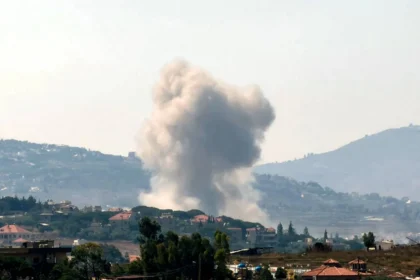
Dubai, United Arab Emirates – The repercussions of the inaccurate report published by Reuters claiming that explosions had been heard in central Dubai have gone beyond the boundaries of an isolated journalistic error. The incident has opened a broader debate about the responsibility of international media organisations operating in the United Arab Emirates, the distinction between freedom of expression and the publication of unverified factual information, and the position of Emirati media professionals within newsrooms that communicate the country’s image to the world.
The incident began on July 16, 2026, when Reuters published a report stating that explosions had been heard in central Dubai. The Government of Dubai Media Office quickly denied the report, confirming that the information it contained was inaccurate and urging media organisations and the public to obtain information from official and reliable sources and to avoid circulating rumours and unverified reports. It also announced that the necessary action would be taken against organisations publishing inaccurate information about the emirate, in accordance with the applicable legal framework.
The following day, Reuters withdrew the report and expressed regret for publishing it, acknowledging that it had failed to meet the agency’s editorial standards. Reuters said it had been unable at the time of publication to immediately verify the source or significance of the sounds and that the original report had not included this essential context.
The apology, however, did not bring the matter to an end. On July 18, the UAE Public Prosecution announced that it had expanded its investigation into the publication and circulation of the report. After hearing the correspondent’s statement, it summoned those responsible for preparing, approving and publishing the material within the agency to examine their respective roles, the procedures followed before publication, and the extent of compliance with legal and professional verification standards.
UAE Attorney-General Counsellor Dr Hamad Saif Al Shamsi confirmed that withdrawing the material and apologising for it would not halt the investigation, which aims to determine responsibility and take the appropriate legal measures in light of its findings.
A Factual Claim Is Not an Opinion
The incident exposes a recurring confusion between freedom of opinion and the right to publish information. Criticising a public policy, assessing the performance of an institution, or expressing a political or economic position falls within the scope of opinion and analysis. Announcing that explosions have occurred in the centre of a city densely populated by residents and visitors and home to major economic and tourism facilities, however, is a factual claim with security, economic and social consequences. Such a claim requires clear evidence and confirmation from multiple sources before being broadcast to the world.
The UAE Constitution guarantees freedom of expression and of the press within the legal framework, while Federal Decree-Law No. 55 of 2023 regulates media activities undertaken by individuals, organisations and outlets operating in the country, including those based in free zones and foreign media offices.
Media content standards also require organisations to respect the interests of the state and society, ensure accuracy, and refrain from publishing rumours or false and misleading information. The same regulatory framework applies to licensed foreign media offices. A globally recognised name or international reach does not grant an organisation immunity from professional and legal accountability in the country from which it operates.
The Reuters case, therefore, does not concern an opinion that criticised Dubai or a political position that differed from an official view. It concerns a specific piece of information presented as an event that had occurred on the ground, which was subsequently denied by the authorities and withdrawn by the agency itself because it had failed to meet its editorial standards.
Open Doors for Global Media
Since the establishment of Dubai Media City in 2000, the United Arab Emirates has pursued a clear policy of attracting international media and creative organisations. It has provided them with a legislative and commercial environment and advanced infrastructure that have made Dubai and Abu Dhabi two of the region’s most prominent centres for media and production.
The media ecosystem operated by TECOM Group, which includes Dubai Media City, Dubai Production City and Dubai Studio City, is home to more than 4,000 international and local companies and approximately 40,000 professionals working across the media, creative and content-production sectors. The ecosystem includes major international organisations and networks operating in news, broadcasting, advertising, production and media technology.
In Abu Dhabi, twofour54 hosts more than 800 companies working in media, entertainment and the creative industries. These include international organisations, local and emerging businesses, as well as thousands of employees, freelancers and content creators. Together, the two leading media and creative clusters alone accommodate more than 4,800 companies.
The UAE’s appeal is not limited to its geographical location or economic stability. It also provides an integrated system of incentives and support. Within TECOM’s districts, companies receive establishment, licensing, visa and advisory services through a platform offering more than 200 government and commercial services, in addition to flexible offices, studios, sound stages, broadcasting facilities and production infrastructure.
Abu Dhabi also provides flexible licences, offices, production facilities, government coordination services, filming permits and access to locations. It additionally offers a cash rebate programme beginning at 35 per cent of eligible production expenditure, which has helped attract more than 180 major productions to the emirate.
The UAE’s media regulator also provides specialised services for accrediting correspondents employed by foreign media offices, sponsoring journalists arriving from overseas, and issuing permits for coverage, terrestrial, aerial and maritime filming, broadcasting and other media activities.
This environment reflects a high level of openness and confidence in international media institutions. It demonstrates that the UAE has not placed barriers in the way of foreign media. Instead, it has enabled them to establish regional headquarters, recruit employees, access events and locations, and operate from within the country to serve regional and global markets.
Thousands of Graduates, but Limited Representation in Leadership
Against this significant expansion, a fundamental question arises: where does the Emirati media professional stand within this ecosystem, and how many leadership positions are held by UAE nationals in the newsrooms of international and private organisations headquartered in the country?
Data from only two universities confirms that the UAE possesses a substantial base of media and communication graduates. The University of Sharjah’s College of Communication, established in 2002, has recorded 4,794 graduates, including 169 students who graduated during the 2023–2024 academic year alone.
At Zayed University, published tables for the College of Communication and Media Sciences record at least 986 graduates among cohorts that began their studies between autumn 2004 and autumn 2014.
The documented minimum number of communication and media graduates from these two universities alone therefore exceeds 5,780, without including graduates from United Arab Emirates University or other government and private universities and colleges offering programmes in media, communication, public relations and digital production.
This pool of national talent makes the issue larger than a simple shortage of qualified Emiratis. Thousands of graduates have completed academic programmes in journalism, radio, television, public relations, advertising and digital media, yet positions such as editor-in-chief, news director and senior editorial decision-maker remain beyond the reach of many of them in private and international organisations.
Emiratising media leadership does not mean excluding Arab or international professionals who have contributed to the establishment and development of media organisations. It means creating a genuine pathway that enables Emirati professionals to move from training and supporting positions into roles where editorial decisions are made.
A citizen who understands the country’s society, institutions, language, and cultural and political context possesses an element that professional experience alone cannot provide. In reporting related to security, the economy or the country’s reputation, understanding the local context becomes an integral part of the verification process rather than an addition made after the story has been completed.
Who Reviews the Story Before It Reaches the World?
The Reuters report places the decision-making process inside foreign news agencies under scrutiny. The report did not remain confined to a local platform with limited reach. It was published under the name of one of the world’s largest news agencies and reached, within minutes, media organisations, markets and users who rely on Reuters as a primary source of information.
When a report concerns alleged explosions in Dubai, its impact is not limited to causing concern among residents. It may extend to aviation, tourism, financial markets, corporate and investment decisions, and the international coverage that follows.
For this reason, the Public Prosecution’s investigation focused on every stage in the production of the material: gathering the information, drafting the report, approving it and deciding to publish it. In major organisations, an error is not solely the responsibility of the correspondent. It is the outcome of an editorial chain that includes the editor, supervisor, news director and the person authorised to release breaking news.
This highlights the importance of having Emirati editorial leaders, or at least Emirati deputy editors-in-chief and news directors with genuine authority, within organisations that produce reporting affecting the country and its society.
The presence of a UAE national in the newsroom is not intended to impose an official narrative or close the door to criticism. It is intended to add a layer of local knowledge and accountability and to prevent sensitive decisions from being made by individuals who may understand international journalism standards but lack a complete awareness of the implications of a term, piece of information or timing within Emirati society.
Emiratisation Cannot Be Achieved Through Token Positions
Emiratisation in the media must move beyond counting the number of UAE nationals employed and begin measuring their positions within the editorial hierarchy. The true standard is not the number of Emiratis working in government relations, marketing or presentation. It is the number who possess the authority to select a story, determine its angle, approve its headline and authorise its publication.
International organisations benefiting from the UAE’s media environment can become direct partners in developing these leaders. This can be achieved through mandatory training and promotion programmes, phased targets for Emirati representation in senior editorial positions, the appointment of UAE nationals as deputy editors-in-chief and news directors, and the granting of genuine authority and a clear pathway towards leadership.
Such measures would also serve the interests of international organisations themselves. Local leadership reduces errors of interpretation, improves access to sources, strengthens an organisation’s understanding of society, and protects it from mistakes whose legal and professional cost may far exceed the cost of investing in national talent.
Privately Owned National Media Outside the Circle of Privilege
The discussion remains incomplete without examining the position of privately owned national media organisations established by Emirati citizens. These organisations operate in the same market and bear the costs of licensing, employees, technology, studios, production and distribution. Yet they compete against international networks with substantial capital, global advertising bases and experience accumulated over decades.
While the state attracts international organisations through incentives, offices, studios, business-establishment services, filming facilities and production support, privately owned national media organisations require a parallel framework that ensures their ability to grow and survive. This is particularly important because their role extends beyond commercial activity to supporting the national narrative, countering rumours and reporting the country’s achievements in multiple languages.
Support for national media should not be restricted to major government-owned organisations. Diversity of ownership and the presence of strong privately owned national institutions provide the media landscape with greater flexibility, create employment opportunities, allow different voices and production styles to emerge, and build a professional reserve that can be relied upon during crises and exceptional events.
Government Contracts as a Tool for Building a National Sector
Government and semi-government contracts for media production, public relations, event coverage and content creation represent an important part of the country’s media market. Public procurement can therefore become a tool for developing national organisations rather than focusing solely on price, international brand recognition or the size of a bidder’s previous portfolio.
Tender evaluation systems can assign clear weight to Emirati ownership, the percentage of UAE nationals in editorial and management positions, the level of expenditure retained within the country, graduate-training plans, knowledge transfer, and the use of local talent and businesses.
A proportion of media projects could also be allocated to national small and medium-sized enterprises. Alternatively, major contracts awarded to international companies could require the participation of a genuine national partner, ensuring that expertise is transferred and that part of the economic return remains within the local sector.
This does not mean awarding projects to organisations that fail to meet quality standards. It means correcting a competitive environment in which international companies begin from a stronger position because of their size, global network and financial resources, while privately owned national organisations bear the full cost of building their reputation, reaching clients and developing their technical infrastructure.
Responsibility in Return for Trust
The UAE has granted international media organisations broad freedom to operate and move within the country. It has provided them with stability, facilities, headquarters, infrastructure and access to one of the region’s most active markets. This trust creates a corresponding responsibility that extends beyond compliance with the law. It includes investing in UAE nationals, understanding the community and applying the highest standards of verification before publishing reports affecting the country’s security, economy and reputation.
The official handling of the Reuters report demonstrated that an apology and withdrawal do not exempt an organisation from reviewing what occurred and determining responsibility, particularly when the error comes from an international agency whose reports are expected to pass through multiple layers of scrutiny.
At the same time, the incident provides the UAE media sector with an opportunity to reassess its Emiratisation and support policies. It offers a chance to move from hosting international organisations to involving UAE nationals more deeply in their leadership, and from facilitating foreign investment to building privately owned national organisations capable of competing and expanding regionally and internationally.
Partnership, Not Dependency
The UAE does not need to choose between openness to international media and support for national media. The two paths complement one another when the relationship is based on responsibility, knowledge exchange and equal opportunity.
Continuing to attract international agencies and networks strengthens the country’s position as a centre for media and content production. The sustainability of that position, however, also depends on Emirati media professionals being present in decision-making rooms and on privately owned national organisations having the resources, opportunities and contracts needed to grow.
The most important lesson from the report about the alleged “Dubai explosions” is not merely that international organisations can make mistakes. It is that a single editorial error can expose wider gaps in leadership, accountability and Emiratisation. Media freedom cannot be separated from accuracy. Openness cannot be separated from responsibility. Hosting international organisations cannot be considered complete without enabling the citizens of the country to lead an influential part of the industry operating on their soil and communicating their news and image to the world.