Islamabad, Pakistan – In an in-depth analytical piece published in the Pakistani newspaper The Tribune, Pakistani academic and writer Dr. Muhammad Ali Ahsan highlighted the radical shift in Emirati foreign policy. He argued that the recent war with Iran was not merely a security test, but a pivotal moment in assessing the UAE’s rise as an influential “middle power” in the regional order.
From a “protectionist state” to a “strategic player”
Ihsan argues that the UAE has successfully transitioned over the past decade from a “small, protectionist state” strategy to an ambitious one aimed at shaping its own strategic environment.
The author points out that the 2020 Abraham Accords marked a major turning point. They reinforced Abu Dhabi’s self-perception as a regional player capable of forging partnerships and alliances that transcend the traditional Gulf framework. This propelled the UAE into a broader sphere of regional and international influence.
According to the article, the UAE’s growing influence is based not only on traditional military power but also on “economic and logistical strength.” Abu Dhabi possesses a remarkable ability to control global trade routes, supply chains, and logistics.
This explains the UAE’s strategic expansion into Red Sea ports, the Horn of Africa, and East Africa. Abu Dhabi considers the security of these regions a direct extension of its national security, given that its vital economy depends on the stability of global shipping lanes and energy flows.
War and changing regional priorities
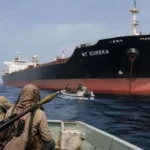
The author reveals that the recent war with Iran exposed the vulnerability of the global economy to threats targeting supply chains. This is why the UAE has focused intensely on restoring stability. Opening maritime routes has become a top priority that transcends ideological calculations or traditional conflicts.
Ihsan points out that current Emirati policy is based on “diversifying partnerships” and avoiding dependence on a single international power; it maintains close relations with the United States. At the same time, it is expanding its cooperation with rising powers such as China, Russia, India, and Pakistan, all to protect its economic and strategic interests.
The UAE-Pakistan model: a partnership for the future
The article highlights UAE-Pakistan relations as a leading example of this strategic approach. The relationship has evolved beyond traditional financial support into a comprehensive strategic partnership encompassing infrastructure investment, energy, and economic and security cooperation.
Ihsan emphasizes that Pakistan’s importance to the UAE stems not only from its market size and historical ties, but also from its strategic geographic location as a link between the Gulf region, South Asia, and Central Asia. This makes it a cornerstone of Abu Dhabi’s future trade and economic corridor projects.
The author also noted that the Pakistani community in the UAE forms a vital humanitarian and economic bridge. He further highlighted the UAE’s ongoing role in supporting Pakistan’s economic stability during crises, reinforcing this long-standing perspective.
Independence and future outlook
Dr. Ihsan concludes that the war has pushed the UAE to adopt a greater degree of independence in its political and security decisions, after realizing that current challenges may not always find an effective collective response from traditional regional systems. The author believes that the true test for the UAE in the coming years will not be solely its economic strength, but rather its ability to expand its regional influence and network of international partnerships without alarming its neighbors or engaging in draining competition.
In conclusion, the author argues that the UAE no longer acts as a small, dependent Gulf state, but rather as a rising middle power that leverages trade, ports, and long-term economic integration to shape its strategic environment. The growing partnership with Pakistan exemplifies this Emirati approach to building influence through development and shared interests.