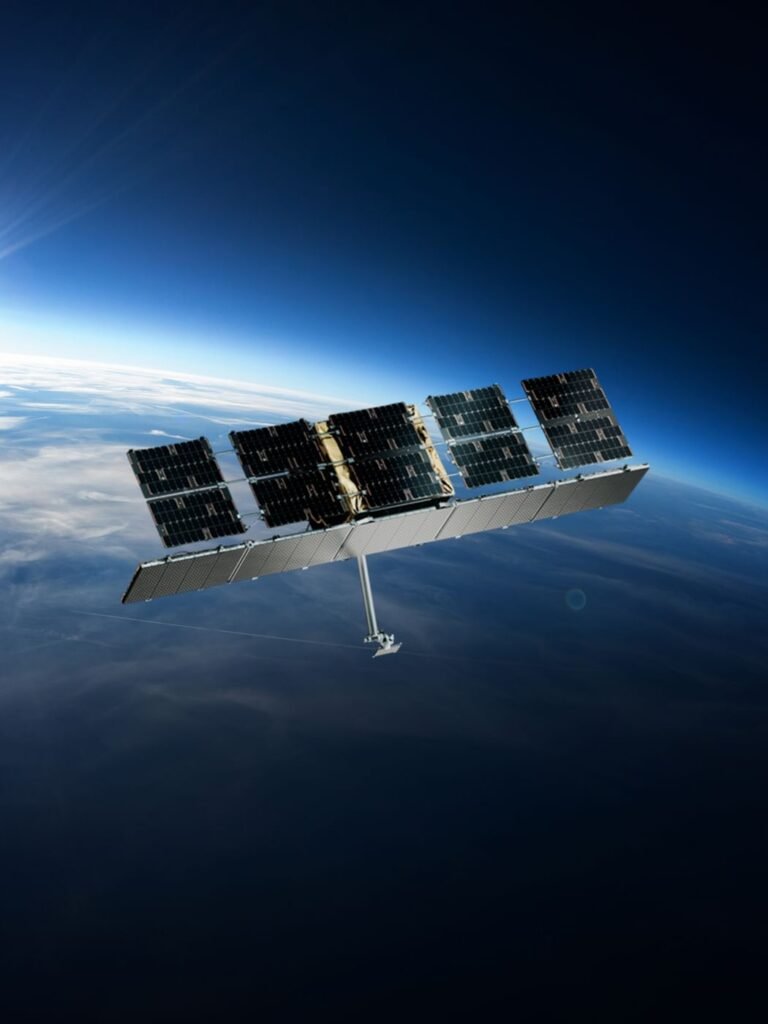
Abu Dhabi, UAE – Space 42, an AI-powered space technology company with a well-established international presence, has announced that its Foresight-3, Foresight-4, and Foresight-5 radar satellites have entered full operation.
The move represents a new milestone in the development of the Foresight Earth observation constellation. Which today includes five radar satellites. This enables continuous data collection and provides high-resolution geospatial analyses that support decision-making.
The radar satellites were manufactured in partnership with ISI in Finland. To support technology transfer and ensure sustainable access to advanced capabilities, in addition to enhancing the localization of supply chains.
As part of this approach, basic assembly and testing operations have been completed at Space 42 Space Systems’ assembly and testing facility in Abu Dhabi.
Strengthening monitoring capabilities
The Forsyte-3, Forsyte-4, and Forsyte-5 radar satellites were launched into low-medium-inclination Earth orbit to expand coverage. This enhances monitoring capabilities across areas of strategic importance inhabited by more than 90% of the world’s population.
The Foresight constellation provides radar satellite images to Space 42’s GIQ data analysis center, which is supported by artificial intelligence. Which converts raw data into accurate information that supports decision making in minutes. By operating across integrated orbits, the system maintains consistent performance at different times of the day.
The constellation provides a shooting resolution of up to 25 centimeters with the ability to shoot in various weather conditions. This allows small changes on the Earth’s surface to be monitored from space efficiently and reliably.
The GIQ Data Analysis Center also processes this data and converts it into accurate data, which contributes to reducing emergency response time by up to 90%. Reduce predictive maintenance costs by up to 30%, and reduce operational deficiencies by up to 25%.
Accelerated growth in Earth observation services
Demand for Earth observation services is growing rapidly as governments and various sectors rely on geospatial analytics to manage risks, improve operational efficiency, and support climate and security goals. By 2030, Earth observation applications are expected to generate economic value exceeding $700 billion, in addition to supporting emissions reduction efforts across multiple sectors.
The UAE is working to consolidate its position as a leading provider of advanced Earth observation capabilities. Based on the National Space Strategy 2030, investments in sovereign infrastructure, and the integration of artificial intelligence and local manufacturing technologies.
The expansion of Space 42’s Foresight constellation supports this vision. By combining space data with AI-powered analytics.