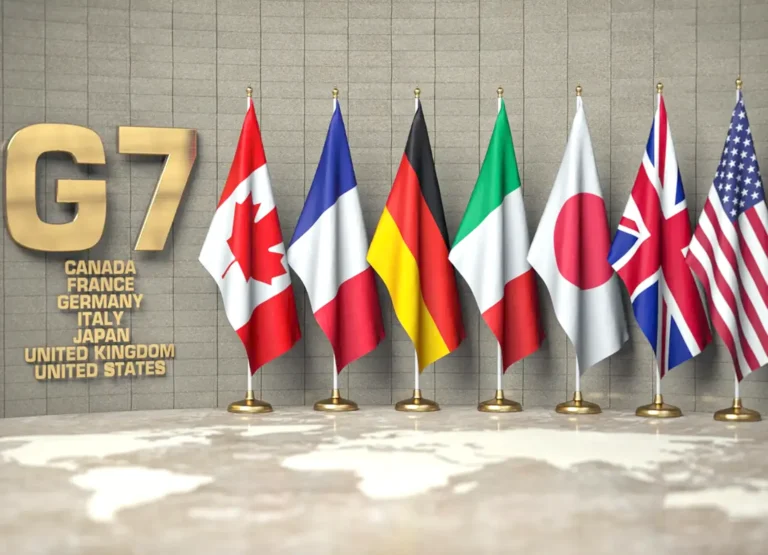
Dubai, UAE – In a joint and strongly worded statement issued on Tuesday, finance ministers from the Group of Seven major economies reiterated their firm commitment to the immediate reopening of the Strait of Hormuz to international maritime traffic. They stressed the critical importance of addressing the deep disruptions in global markets caused by ongoing geopolitical and military tensions in vital waterways. This must be addressed in a serious and swift manner.
Threat to the trajectory of global economic growth
In their joint statement, reported by Reuters, the ministers affirmed their unwavering commitment to multilateral cooperation. This cooperation aims to resolutely address all current risks threatening global economic growth. These risks are also pushing inflation to record levels. The finance ministers of the G7 nations—the United States, Britain, Canada, France, Germany, Italy, and Japan—explained that their countries remain committed to making every effort to ensure stability and security in global energy markets. In addition, they aim to prevent any sudden spikes in crude oil and liquefied natural gas prices. Such spikes could result from supply chain disruptions.
The finance ministers of the G7 nations—the United States, Britain, Canada, France, Germany, Italy, and Japan—explained that their countries remain committed to making every effort to ensure stability and security in global energy markets. In addition, they aim to prevent any sudden spikes in crude oil and liquefied natural gas prices. Such spikes could result from supply chain disruptions.
Warnings against arbitrary export restrictions
In a related development, the G7 finance ministers issued an urgent and unequivocal appeal to all countries and their governments. They asked these governments to refrain from imposing any arbitrary or unilateral restrictions on commodity exports and energy flows. They emphasized that such restrictions pose a direct threat to global food and energy security. Furthermore, these restrictions exacerbate the trade bottlenecks currently plaguing international trade.
This firm, collective stance from the world’s major economic powers comes amidst escalating international concerns about the ongoing catastrophic economic repercussions of closing or restricting maritime traffic in the Strait of Hormuz. This strait is the vital artery for transporting oil and gas supplies from the Arabian Gulf region to global markets.
As a consequence, experts have warned that continued obstruction of commercial shipping and tanker traffic through the Strait could disrupt nearly a quarter of global energy supplies. This would jeopardize international economic recovery efforts. It would also compel the international community to take immediate measures. Such measures aim to safeguard the security of free waterways and ensure the continuity of vital supply chains.
Furthermore, these restrictions exacerbate the trade bottlenecks currently plaguing international trade. This firm, collective stance from the world’s major economic powers comes amidst escalating international concerns about the ongoing catastrophic economic repercussions of closing or restricting maritime traffic in the Strait of Hormuz.
This strait is the vital artery for transporting oil and gas supplies from the Arabian Gulf region to global markets. As a consequence, experts have warned that continued obstruction of commercial shipping and tanker traffic through the Strait could disrupt nearly a quarter of global energy supplies.
This would jeopardize international economic recovery efforts and compel the international community to take immediate measures. Such measures aim to safeguard the security of free waterways and ensure the continuity of vital supply chains.