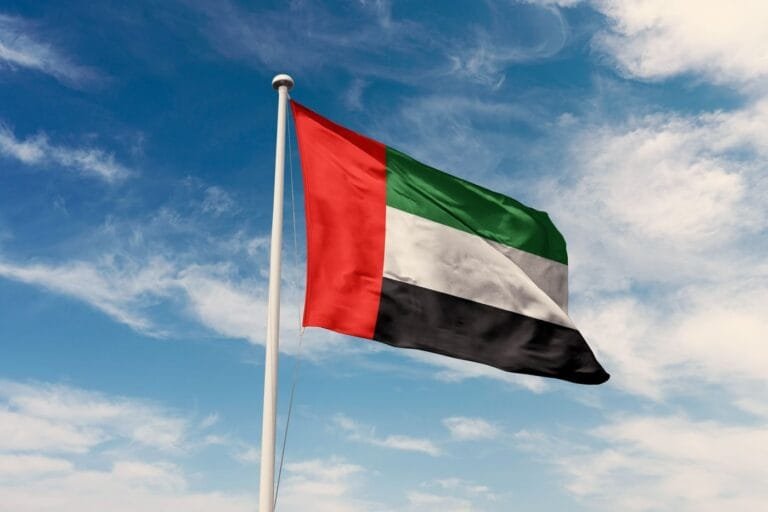
Abu Dhabi, UAE – On Wednesday, the UAE celebrates the 29th National Environment Day.
It renews its commitment to working diligently to develop and implement policies, strategies, legislation, plans and programs that look forward to building a sustainable future that takes into account the balance of economic and social growth requirements and environmental conservation requirements.
The UAE continues its efforts to consolidate the principles of sustainability and environmental conservation.
Through numerous pioneering initiatives and solutions that ensure the protection of natural resources, the promotion of biodiversity, and the dissemination of environmentally friendly practices.
This is in line with the national foundations concerned with achieving climate neutrality by 2050.
The UAE has adopted an integrated policy to promote environmental sustainability, which includes numerous strategies and initiatives.
Such as the UAE Strategic Initiative to Achieve Climate Neutrality by 2050, and the UAE National Climate Change Plan 2017-2050.
In addition to the National Circular Economy Policy 2021 – 2031.
Since 2012, it has also adopted the green economy methodology as a path to sustainable development through the UAE Green Development Strategy.
In addition to launching the “National Program for Adaptation to Climate Change”.
Since the beginning of this year, the UAE has witnessed a wide range of qualitative initiatives and projects in the fields of environmental protection, the transition to clean energy, and innovation in green technologies.
This strengthens its global position as one of the countries most committed to addressing climate challenges and promoting sustainability.
new laws
The UAE government issued a new law to regulate and monitor international trade in endangered animals and plants, supporting the country’s efforts to protect and preserve biodiversity.
In addition to strengthening the legal protection of endangered animal and plant species, and regulating international trade in them.
In line with the International Convention on Trade in Certain Endangered Species of Fauna and Flora.
On the sidelines of Abu Dhabi Sustainability Week 2026, the UAE revealed that the installed renewable energy capacity in the country has exceeded 7.7 gigawatts, with projects underway that will raise the total capacity to more than 23 gigawatts by 2031.
National consumption efficiency programmes, most notably the National Energy and Water Demand Management Programme, launched in 2020, have also contributed to reducing more than 14.8 million tons of carbon emissions and achieving financial savings exceeding two billion dollars over five years, as part of a national path aimed at reducing energy consumption by 43% and water by 50% by 2050.
For its part, the Mohammed bin Zayed Fund for the Conservation of Living Organisms and the Mubadala Foundation announced the launch of a major new international initiative aimed at protecting dugongs and seagrass habitats in the UAE and four other countries.
In turn, Abu Dhabi Future Energy Company “Masdar” announced its cooperation with “Elite Agro”, a reliable global company in the field of agriculture, food production and development, to launch the first agricultural solar photovoltaic energy project in the Middle East and North Africa region.
Through the Environment Agency – Abu Dhabi, the UAE achieved an achievement that is considered one of the largest in the world, recording an unprecedented rise in the sustainable fishing index to reach 100% by the end of 2025.
After it was only 8% in 2018.
Qualitative achievements
In 2025, the UAE achieved qualitative achievements in promoting environmental sustainability.
It witnessed the launch of the largest and first project of its kind in the world combining solar energy and energy storage batteries in Abu Dhabi.
In addition to launching the first marine exploration voyage of its kind to draw a comprehensive geological map of the seabed in the country’s waters using the research ship “Jeon”, which is the first specialized research ship in the country.
In the field of the circular economy, the year 2025 was marked by the announcement by Environment Company of the development of the first station in the Middle East to convert waste into green hydrogen, with a production capacity of up to 7 tons per day by 2027.
Meanwhile, the Ministry of Industry and Advanced Technology launched a national project to recycle used tires and convert them into materials used in new industries.