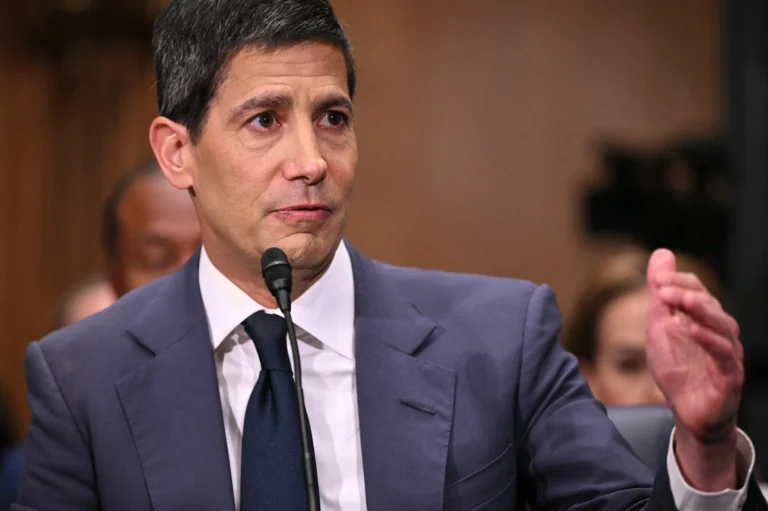
Washington, DC – Federal Reserve Chairman Kevin Warsh set the stage for the central bank’s upcoming September meeting, which he described as a pivotal moment in its ongoing battle to curb inflation. Warsh warned that domestic price pressures have not slowed sufficiently, a strong signal that economists and investors interpreted as a clear prelude to raising interest rates if inflation remains significantly above the Fed’s 2% target, according to Bloomberg.
Federal Reserve officials are scheduled to hold their regular meeting on September 15 and 16, amid a significant rise in market and financial expectations for another interest rate hike. Following Warsh’s remarks, the implied probability of a rate increase at the September meeting jumped to over 50%, compared to just 35% before his highly anticipated speech at the Fed’s annual conference in Jackson Hole, Wyoming.
The anticipated inflation report and the monetary policy decision
Despite the strong tone of his speech, Warsh did not declare an interest rate hike a certainty. A segment of Federal Reserve officials still believes it is necessary to proceed cautiously and await new economic data before making any final decision. In this context, the August US Consumer Price Index (CPI) report, officially due on September 11, will be a crucial factor. A sudden slowdown in inflation could reduce pressure for monetary tightening, while a further rise would significantly increase the likelihood of a rate hike. Warsh explained that the Fed’s primary benchmark is ensuring that core inflation is moving toward the bank’s target “clearly and quickly enough.” He added emphatically that if this does not happen, “we will have to do more.”
Markets brace for the political fallout from the Fed’s decisions
Investors and financial analysts interpreted the Federal Reserve Chair’s remarks as a move toward a tighter monetary policy, although opinions differed on the precise timing of the move. Analysts at Barclays and Société Générale predicted that the Fed would raise interest rates by a quarter of a percentage point at its September meeting. They also anticipated a second increase in December, which prompted Evercore ISI to revise its previous forecast.
The September battle is not solely about economic figures; it carries significant political dimensions, especially since any move to raise interest rates before the midterm elections in November would be highly sensitive. This is particularly evident given President Donald Trump’s persistent demands for lower borrowing costs and his frequent criticism of past monetary policies. Stephanie Roth, chief economist at Wolf Research, believes the speech provided a strong justification for action, although the decision remains uncertain due to the Fed’s political calculations.