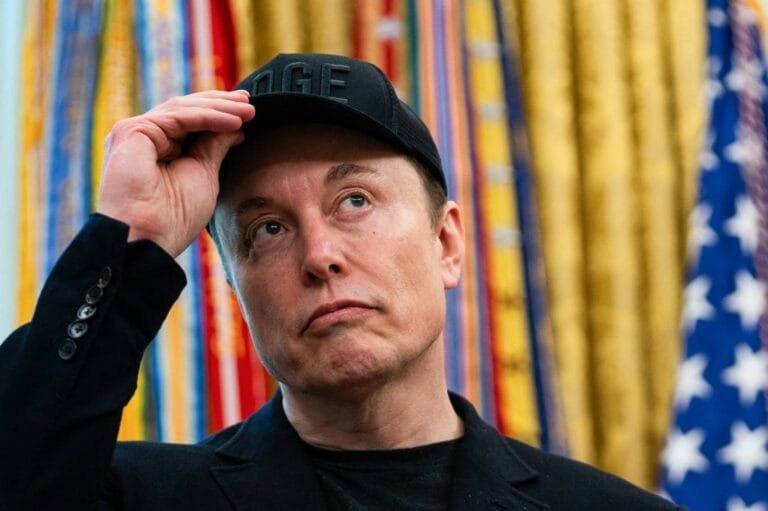
Washington, DC – US federal auditors have reported that a significant portion of the budget savings announced by the Administration of Government Efficiency (DOGE), founded by billionaire Elon Musk, is either inaccurate or entirely unsupported by evidence. This is despite the administration’s announcement of massive savings of approximately $110 billion.
Details of the Government Accountability Office (GAO) report
The Government Efficiency Management Office had begun publishing its estimates on a dedicated website known as the “Receipt Wall.” At the request of members of the U.S. Congress, the Government Accountability Office (GAO) issued a comprehensive audit report to assess the accuracy of those figures and estimates. The report revealed significant shortcomings in several areas, most notably:
Lease contracts: It was found that 108 out of 264 lease contracts identified on the “receipt wall” for illumination had already been terminated by the competent authorities before the establishment of the Government Efficiency Department in the first place.
Department of Defense contracts: The administration announced fictitious savings of $1.7 billion from a Department of Defense IT services contract. However, it later emerged that no actual action had been taken to terminate the contract. Consequently, no real financial savings were achieved.
Lack of transparency: The oversight office noted that the government efficiency department was completely transparent regarding the methodologies used to calculate these savings. Furthermore, department officials failed to respond to repeated requests from auditors for detailed information or data.
The repercussions of the data crisis on public trust
The report concluded that the data quality issues identified significantly diminish the value of the “receipt wall” for policymakers and legislators. The report stated, “Furthermore, when government data is unreliable, it can undermine public trust in government.” The Government Efficiency Office began publishing savings estimates on February 17, 2025. In addition, it announced total savings of $110 billion as of July 7 of that year. These savings were achieved through a wide range of government contracts, grants, and leases.
Background of the founding and political reactions
It is worth noting that the executive order issued by US President Donald Trump to establish the Government Efficiency Administration explicitly stipulated that its work would end on July 4, 2025. Billionaire Elon Musk had taken over the administration’s operations in its early stages. However, he stepped down from his position after only a few months.
The Government Accountability Office (GAO) report was commissioned by Democratic Senators Gary Peters of Michigan and Richard Blumenthal of Connecticut. In his scathing commentary on the report’s findings, Senator Peters stated, “Elon Musk and the Trump administration claimed billions of dollars in savings they could not substantiate, took credit for work that was already underway, and refused to disclose their methodology—all while compromising sensitive data and weakening key government agencies.”