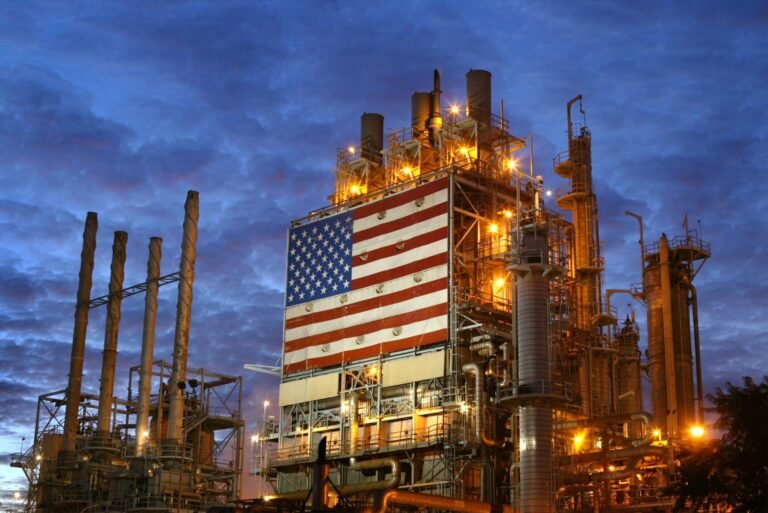
Washington, DC – Recent official data shows that the US emergency crude oil stockpile has fallen to its lowest level since 1983. This decline comes as the Trump administration nears completion of its ambitious plan to release approximately 172 million barrels into the market. This is intended to mitigate the soaring fuel prices resulting from the ongoing conflict with Iran.
According to data released by the U.S. Department of Energy on Monday, the Strategic Petroleum Reserve, established following the Arab oil embargo of the early 1970s, has fallen to a record low of approximately 340 million barrels.
The department announced its plan to release oil in March as part of a coordinated international effort. This came less than two weeks after the United States and Israel launched military strikes against Iranian targets.
Risks of reduced ability to cope with supply disruptions
If this current operation is completed, it will be the second-largest emergency release in the history of the U.S. Strategic Petroleum Reserve. This will leave the reserve at approximately 243 million barrels, roughly one-third of its legally authorized capacity. Experts warn that this severe shortage significantly reduces Washington’s ability to respond to any future disruptions in global energy supplies.
Oil reserve management mechanism and cost reduction
For its part, a spokesperson for the U.S. Department of Energy stated that the current administration is managing the Strategic Petroleum Reserve precisely according to its original purpose. This purpose is to help stabilize oil markets, protect the country from supply disruptions, and enhance national energy security.
The administration releases the oil through a swap program that lends barrels to energy companies, which are obligated to return them later with interest. To date, the return rate has been 26%. This has saved taxpayers more than three billion dollars.
The refill plan and the background of the political tension between the two administrations
The ministry indicated a future plan to refill the reserve with approximately 200 million barrels. This represents an increase of about 20% over what has already been released, and is expected to take place over the next year.
It’s worth noting that the emergency oil reserve was already severely depleted when Trump took office 16 months ago. The previous administration of President Joe Biden had released approximately 290 million barrels through a series of releases following Russia’s invasion of Ukraine. Republicans criticized this move at the time, arguing it was intended to lower gasoline prices ahead of the 2022 midterm elections.
Iran war drives up fuel prices at US gas stations
Trump had previously pledged to replenish the strategic petroleum reserve, which has a total capacity of approximately 700 million barrels. He also criticized Biden’s depleting oil reserves.
Notably, global crude oil futures prices have jumped by about 20% since the outbreak of the war with Iran. This has pushed gasoline prices at US pumps to an average of $4.07 per gallon.