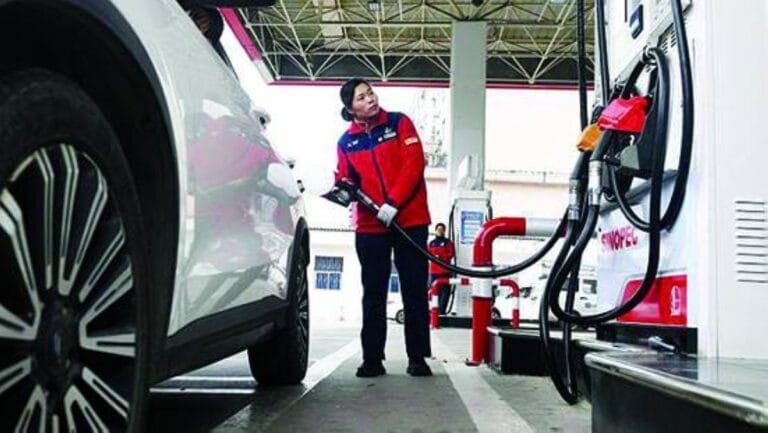
Beijing, China – In a move reflecting a significant shift in geopolitically volatile energy markets, China’s National Development and Reform Commission (NDRC) announced a reduction in retail gasoline and diesel prices at service stations. This is the first such decision since the start of the recent Iranian conflict, which has significantly impacted global crude oil prices and international shipping costs.
Decision of an economic planning body in Beijing
The committee, Beijing’s top economic planning body, explained that the adjustment aligns with recent changes in global markets. China’s fuel pricing mechanism relies on a 10-day review process. This ensures that domestic prices are adjusted to reflect fluctuations in global crude oil prices, both upward and downward, thereby absorbing price shocks and protecting consumers and domestic industries. Under the new decision, vehicle owners in China will see a tangible difference in transportation costs. It is estimated that drivers will save approximately $3 when filling a 50-liter tank with 92-octane gasoline. While this may seem like a small amount in individual cases, it represents a significant relief from inflationary pressures on the transportation and logistics sectors in the world’s second-largest economy.
Retail price ceiling
This reduction follows a series of consecutive increases implemented by Beijing since the start of the oil price war. Retail prices had been raised several times to keep pace with the sharp increases in global oil prices caused by the conflict. Analysts believe this cut may indicate a temporary stabilization of supply chains or Beijing’s success in securing alternative crude oil flows away from areas of immediate conflict. This move also boosts the purchasing power of Chinese citizens at a time of chronic global economic uncertainty. It sends a positive signal about Beijing’s ability to manage regional energy crises with considerable economic resilience.