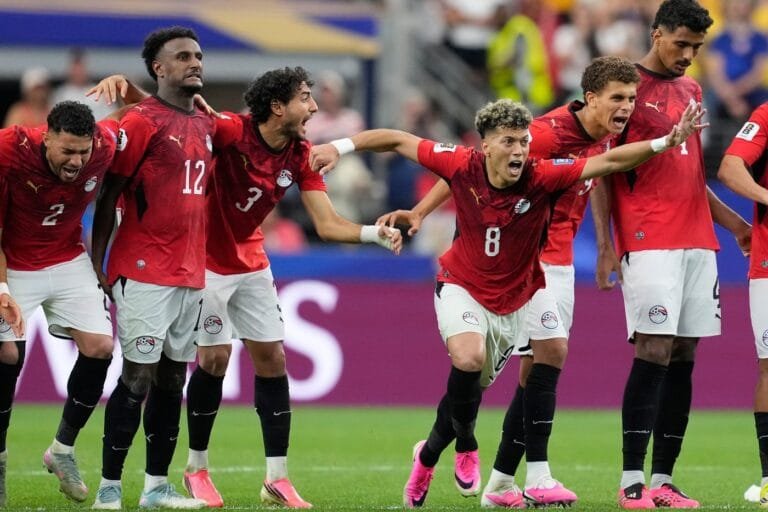
Cairo, Egypt – The Egyptian national team continues to solidify its position as one of the most prominent Arab teams in the history of the World Cup. The team has maintained its place among the list of the most participating and influential teams in the tournament, relying on a long history of presence and strong competition on the global stage, making it a landmark in the record of Arab participation.
Historical Leadership as the First Representative of the Continent
The Egyptian national team is a football pioneer par excellence, as history records it as the first Arab and African team to participate in the World Cup finals. This historical appearance came in the 1934 Italy edition, a participation that opened doors for Arab and African teams to compete in the biggest football forum in the world, laying the foundation for a long journey of Egyptian presence.
The Journey of Participation in Four Editions
The “Pharaohs” have participated throughout their history in four editions of the global tournament; beginning in Italy 1934, then returning in Italy 1990, followed by an appearance in Russia 2018, and leading up to the current 2026 World Cup edition. This record confirms the continuous presence of the Egyptian team among the elite Arab teams that have left a clear mark on the World Cup records.
Immortal Milestones and Renewed Ambitions
The Egyptian national team’s participations have witnessed many remarkable milestones that remain etched in football memory. At the forefront of these is Abdel Rahman Fawzi scoring the first goal by an Arab player in World Cup history in 1934, an achievement that the stars of the “Pharaohs” followed by writing new pages in the history of Egyptian football in subsequent editions.
Sports analysts believe that the continued appearance of the Egyptian national team in the World Cup finals reflects the development of Egyptian football in general. This presence also strengthens the status of the Pharaohs among the major Arab teams, amidst continuous and ongoing ambitions to achieve better results and reach advanced stages in future tournaments, befitting the history and prestige of Egyptian football.