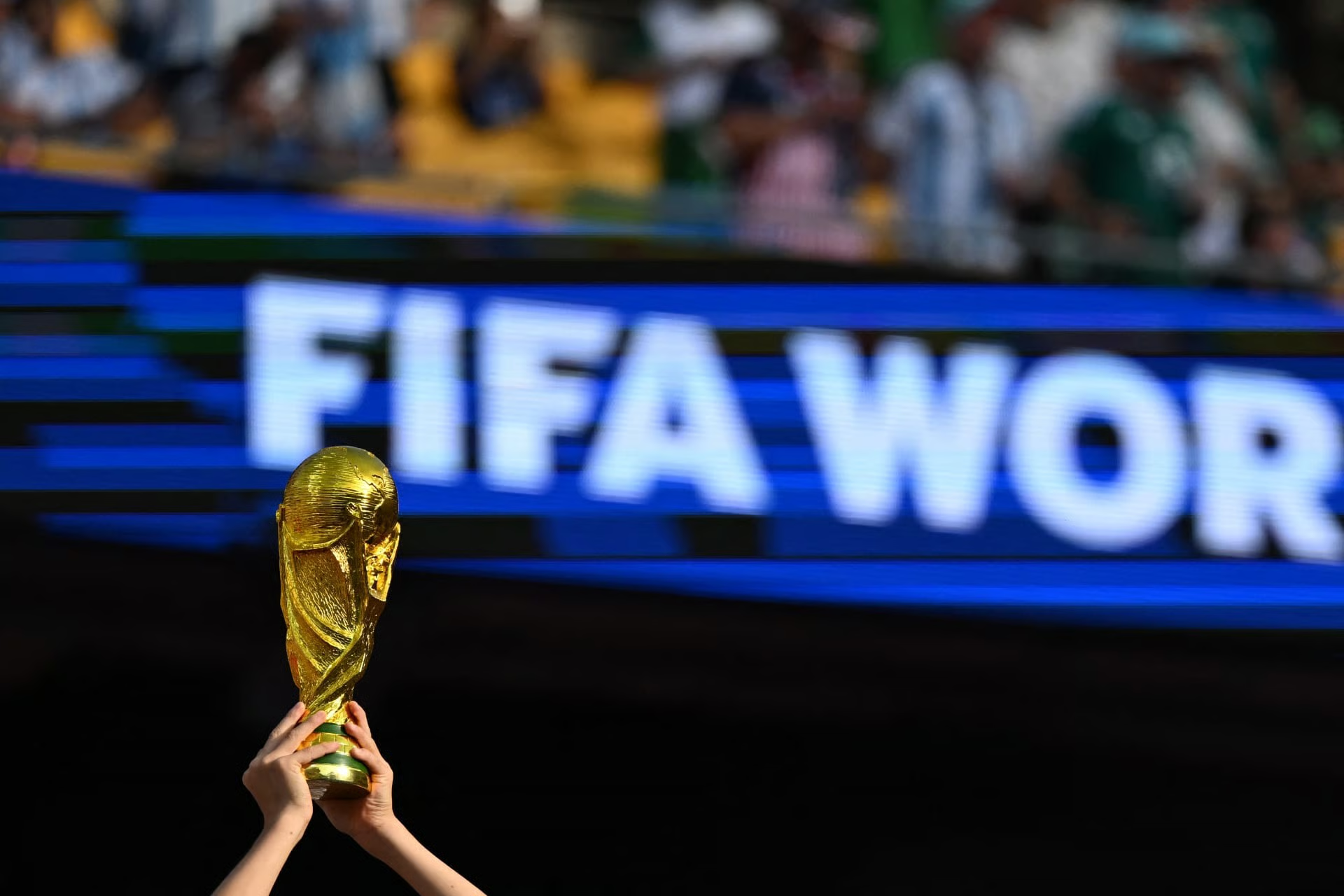
Cairo, Egypt – African football has forcefully asserted itself on the global stage during the 2026 World Cup, achieving a historic feat unprecedented in the continent’s history of participation in the global tournament. Nine out of the ten African teams that entered the competition successfully qualified for the Round of 32. This achievement reflects not only improved results but also confirms that the African continent has transformed from a mere participant into a formidable footballing force. It is now capable of competing with the world’s top teams and asserting its tactical and technical prowess.
Unprecedented collective achievement
This achievement was no accident; it was the culmination of years of investment in talent development, infrastructure improvements, and highly professional technical management of the national teams. The qualified teams included Egypt, Morocco, Algeria, DR Congo, Ghana, Ivory Coast, Senegal, Cape Verde, and South Africa.
These teams successfully secured their qualification, whether by topping their groups, finishing as runners-up, or even as one of the best third-placed teams.
In contrast, Tunisia was the sole exception on the continent. They exited the tournament in the group stage after suffering three consecutive defeats. Therefore, they were the only African team to fail to progress further, while the other teams demonstrated that the continent possesses a “strategic depth” of talent ready to compete at the highest levels.
Tactical development and a strong personality
What distinguished the African presence in this edition was not only the increased number of representatives, but also the strong technical character displayed by the teams on the pitch. African teams demonstrated the ability to compete with the strongest footballing schools in the world, showcasing remarkable tactical diversity. They also increasingly relied on professionals playing in the biggest European and international leagues.
This blend of local talent and strong professional backgrounds gave African teams a clear advantage in crucial matches. As a result, the technical gap with traditionally dominant teams narrowed considerably, making the matches more balanced and exciting.
This edition proved that increasing the number of seats allocated to Africa was the right decision, as the qualifiers and matches showed that the continent already had a broad base of teams that deserved to appear on the world stage for years, but they did not find enough opportunity to prove themselves.
طموحات بلا حدود
Today, the nine teams have set their ambitions at a very high ceiling; eyes are now turning towards the knockout stages (round of 32 and beyond) amid legitimate dreams of reaching the quarter-finals with as many teams as possible, or even reaching the semi-finals, and even going far to compete for the title for the first time in the history of the continent.
This stunning performance raises a fundamental question for FIFA: Has Africa proven that it deserves more seats in future editions? The continent has sent a clear message to the world that African football is no longer content with honorable participation, but has become a “difficult number” in the equation of international competition.
This popular and technical success places African football at a major turning point; the continent now possesses a distinct footballing identity and a distinctive style based on physical strength combined with tactical intelligence.
As these teams prepare to face the challenges ahead in the knockout stages, the entire world awaits to see if 2026 will be the year an African nation lifts the World Cup trophy. That would write the most exciting chapter in the history of the world’s most popular sport.
Now, as these teams continue their journey, it has become clear that the “map of power” in football has changed, and that Africa is no longer just a source of talent, but has become a factory of global victories.