
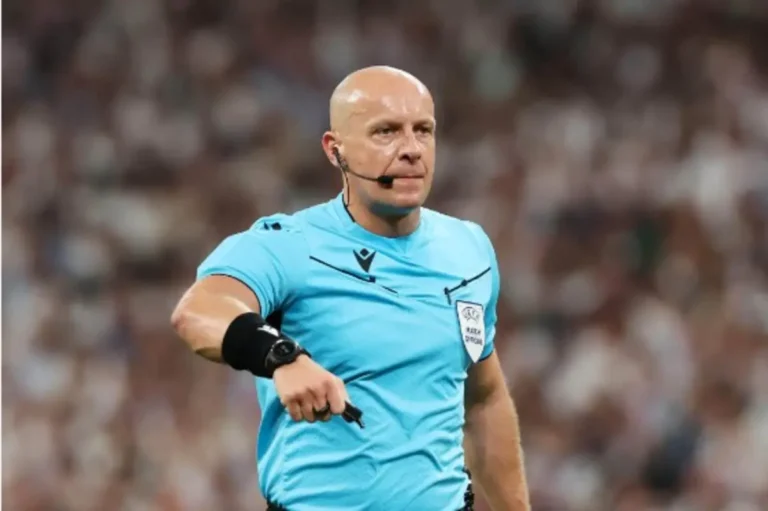
Washington, USA – Polish referee Szymon Marciniak became the focus of intense debate in the first half of the Egypt-Iran match in the third round of Group G at the 2026 World Cup, after making several impactful decisions. The most notable of these was awarding a penalty to the Iranian team. As a result, the referee’s whistle became a major topic of discussion among fans and in the media.
Marciniak is considered one of the world’s most prominent referees in recent years, having officiated the 2022 World Cup final between Argentina and France. He has also refereed the Champions League final and a number of other major continental and international matches. This led FIFA to assign him the crucial match between Egypt and Iran.
The penalty kick sparks controversy
The most notable moment of the first half came when the Polish referee awarded a penalty to Iran after a foul inside the penalty area. This decision sparked widespread protests from fans. However, several refereeing analysts confirmed that the decision was in accordance with the laws of the game. Goalkeeper Mostafa Shobeir’s save of the penalty kick helped to mitigate the immediate impact of the decision on the match result. Nevertheless, the incident remained a point of contention among fans and the media.
A strong personality on the field
Marciniak displayed a strong personality in managing the match, successfully controlling physical confrontations and protests. He also allowed play to continue in several situations that didn’t warrant a stoppage, helping to maintain the flow of the game. The Polish referee demonstrated excellent positioning on the field and the ability to follow most of the key incidents. He effectively utilized his extensive experience in officiating major matches.
Divided reactions
While some Egyptian fans felt certain refereeing decisions went against the national team, others believed the referee managed the match fairly and made no directly impactful errors. Analysts believe the sensitivity and importance of the match in the qualification race meant every refereeing decision was subject to intense scrutiny, especially given that it was a crucial group stage fixture.
A technical analysis of the refereeing performance
From a technical standpoint, Szymon Marciniak successfully managed the match from a disciplinary standpoint, although the penalty decision remained the most prominent and controversial moment. Aside from this incident, the match was free of any clear refereeing errors or decisions that directly impacted the course of the game. The technical data confirms that the Polish referee, with his considerable experience, handled one of the most sensitive matches in Group G. Therefore, the evaluation of his performance will depend on the accuracy of the most significant decision he made during the first half. This decision will likely remain a subject of debate until the end of the match.