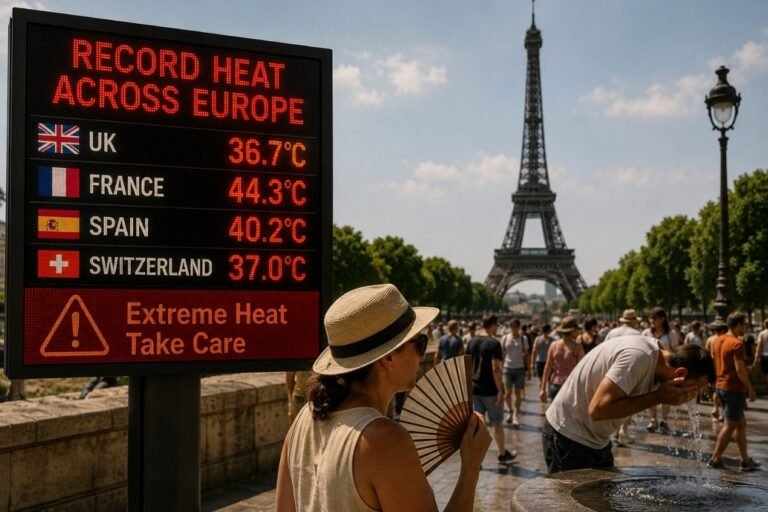
Europe – Recent official data has revealed a tragic toll from the exceptional heatwave that struck Western Europe in late June, with European countries recording more than 10,000 excess deaths. These shocking figures serve as a stark warning about the deadly consequences of climate change, which is now imposing a new reality on European societies.
The elderly: the most vulnerable group
According to reports from the EuroMOMO network—supported by the European Centre for Disease Prevention and Control and the World Health Organization—the most vulnerable groups were the hardest hit.
The vast majority of deaths, exceeding 9,000, were among people aged 65 and over.
This age group is the most susceptible to the health risks associated with high temperatures, ranging from direct heatstroke to the exacerbation of chronic cardiovascular and respiratory conditions.
Official statements: Unusual figures
Commenting on the data, Dr. Lasse Westergaard, chief physician at the Danish Statens Serum Institute and host of the Euromomo network, confirmed that recording this number of deaths at this time of year is “unusual” and deeply concerning. Westergaard added, “It is difficult to explain this significant increase in excess deaths by any reason other than the extreme heatwave,” emphasizing that these levels are extremely high and unprecedented.
Climate change and human activity
These figures are based on an analysis of national mortality data from 27 European countries during the week of June 22-28, the peak of the heatwave.
Scientists ruled out other contributing factors, such as the coronavirus pandemic, as there were no indications to support the hypothesis of other known causes for the sudden surge to 10,650 excess deaths.
These findings align with scientific studies demonstrating that the recent heatwave would have been virtually impossible without the direct impact of climate change caused by human activity.
Field and regional repercussions
Euromomo explained that France and Belgium recorded the highest “very high” death rates, with Belgium experiencing a record high not seen since 2000. An independent study by leading British institutions estimated that 42% of heat-related deaths in England and Wales were directly attributable to the additional temperature increases caused by global warming.
These extreme days were enough to disrupt electricity supplies, close schools, and shatter historical heat records, presenting the continent with existential challenges that demand an immediate collective response.