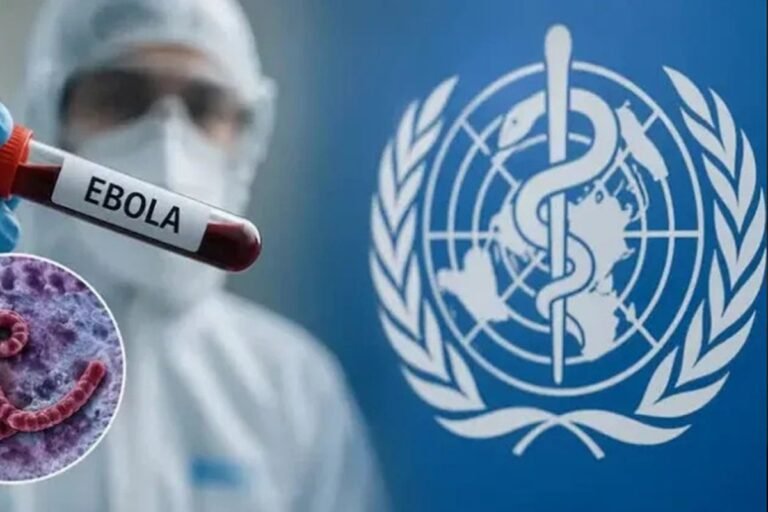
Kinshasa, Congo – The Ministry of Health of the Democratic Republic of Congo announced in an official statement that the total number of confirmed cases of the deadly Ebola virus has risen alarmingly to 321, amid a new and fierce outbreak that has begun to expand its geographical reach to sweep through three major provinces in the country so far.
The latest official government data and statistics, reported by Reuters, show that these laboratory-confirmed cases include 48 deaths so far.
These rising numbers are raising serious concerns among local health authorities and international humanitarian organizations about the potential loss of control over infection chains, which could lead to a new health catastrophe and exacerbate the already dire humanitarian situation in the affected provinces, at a time when preventive medicine teams are intensifying their efforts to isolate those infected and trace their contacts.
The nature of the deadly virus and its hemorrhagic history
The dangerous Ebola virus, which is transmitted to humans from wild animals and spreads among humans through direct contact with the bodily fluids of an infected person, causes the patient to develop an acute and fatal form of hemorrhagic fever accompanied by muscle pain, vomiting, diarrhea, and kidney and liver failure, ultimately leading to very high mortality rates that can reach 90% in some outbreaks if rapid medical intervention is not provided to alleviate the symptoms.
The history of this virus dates back half a century; it first appeared globally in 1976 in two simultaneous but separate outbreaks in two different cities: the first in Nzara, Sudan, and the second in Yambuku, Democratic Republic of Congo.
The disease was named “Ebola” after the famous Ebola River near the village that witnessed the initial outbreak in the Democratic Republic of Congo, and since then it has become one of the most feared viruses on the African continent.
Memories of the Black Death in West Africa
The current wave brings back painful and historic memories of the Black Lives Matter outbreak in West Africa in December 2013.
That health tragedy infected nearly 30,000 people in Guinea, Liberia, and Sierra Leone during the critical period between 2014 and 2017, with more than 11,000 deaths. This outbreak, considered the largest of its kind in modern history, prompted the World Health Organization to declare a global health emergency.