Beijing, China – In a development reflecting the rapid advancement of robotics in China, automation technologies have entered a new phase.
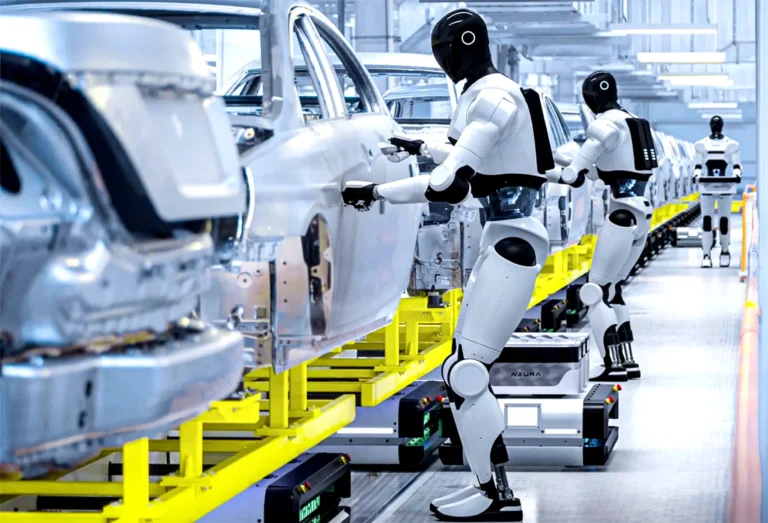
This involves using robotic systems to participate in the manufacturing of other robots,
paving the way for an industrial model that relies more heavily on machines in production processes.
The significance of this step lies not only in replacing human workers in some tasks,
but also in the possibility of building a production system capable of
manufacturing machines that will, in turn, carry out new industrial processes.
From operating the robot to its production
The concept relies on integrating robots with advanced production lines,
control systems, and artificial intelligence.
This enables machines to perform a range of repetitive and precise tasks,
from handling components to assembly and testing.
As these technologies develop, factories could transform into semi-autonomous environments.
This would be achieved with minimal human intervention in monitoring, maintenance, and key decision-making.
China is betting on smart manufacturing
China is placing great emphasis on developing its robotics and artificial intelligence sectors
as part of a broader drive to modernize its industries and boost productivity.
It also aims to reduce reliance on manual labor in tasks that can be automated.
This trend is gaining particular importance with the increasing use of robots in the automotive, electronics,
and logistics industries. Its significance is also evident in other sectors.
Is the mass production phase beginning?
Observers believe that combining robotics and artificial intelligence
could significantly transform the landscape of factories in the coming years.
This is especially true if machines become capable of producing
new generations of robots at a lower cost and greater speed.
This development could represent a step toward more autonomous factories.
This would allow for increased production volume and longer working hours with less human intervention.
However, it also raises questions about the future of jobs and the types of skills required in the labor market.
As China continues to expand its investments in automation,
it appears that future industrial competition will not only be between companies and factories,
but also between nations capable of building the most intelligent and autonomous production systems.