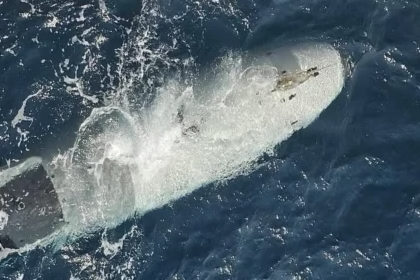
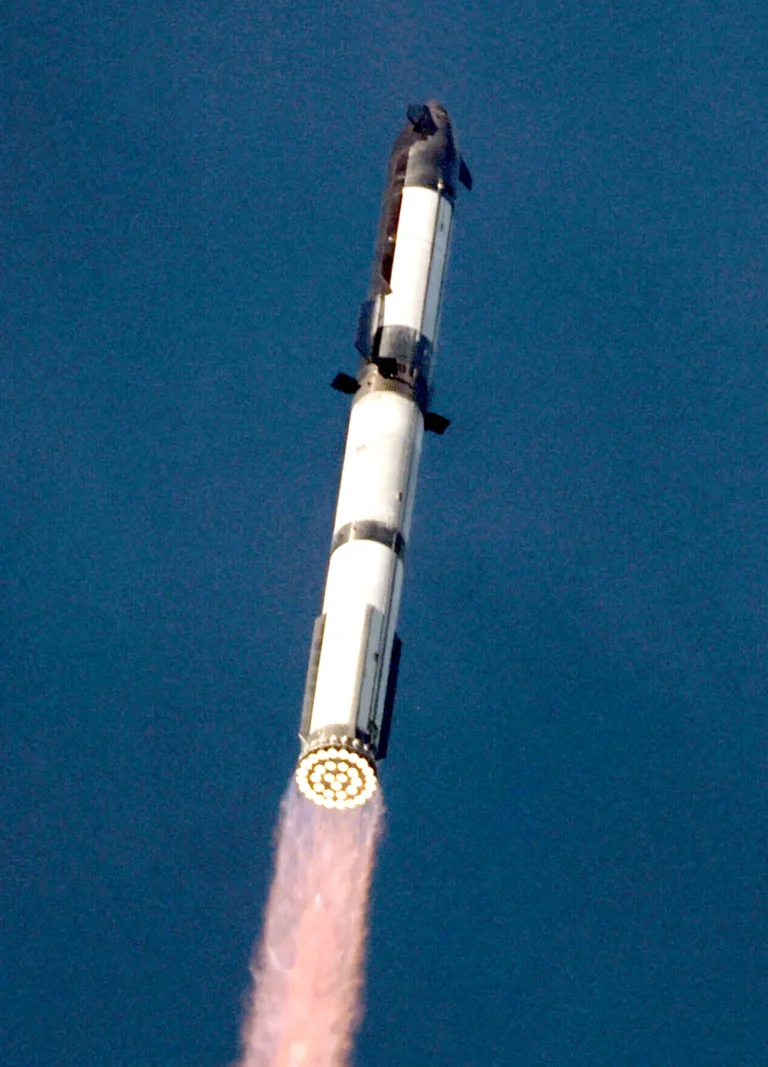
Washington, DC – SpaceX’s Starship rocket has achieved a new milestone by successfully executing the lightest water landing ever,
a move the company’s engineers consider a significant advancement in its program to develop a spacecraft for missions to the Moon and Mars.
Test data showed that the rocket was able to reduce its landing speed to an unprecedented level before touching down on the water’s surface,
reflecting a significant improvement in the performance of its guidance, control, and engine systems.
This provides engineers with precise data to refine future landing techniques.
Starship is the largest and most powerful rocket
This test is part of a series of experiments SpaceX is conducting to develop a fully reusable launch and recovery system,
which will help reduce the cost of spaceflights and increase the frequency of launches in the coming years.
Company engineers explained that a successful landing was not the only objective.
The mission also focused on testing the vehicle’s performance during the final stages of return and monitoring the response of the structure,
engines, and navigation systems under real-world conditions. This provides crucial information before operational flights begin.
Starship is the largest and most powerful rocket developed to date. It is designed to transport humans
and cargo to the Moon and Mars, as well as to carry out other deep-space missions.
NASA has selected it as the crewed lander for the Artemis program, which aims to return astronauts to the lunar surface.
The future of manned spaceflight
Space industry experts believe that the continued progress in Starship testing reflects SpaceX’s rapid development approach,
which relies on repeated testing and learning from each experience to continuously improve design
and performance.Project leaders hope these results will pave the way for more complex missions in the future,
ultimately leading to the goal of operating a fully reusable spacecraft.
This will support plans for lunar and Martian exploration and open new horizons for the future of human spaceflight.