
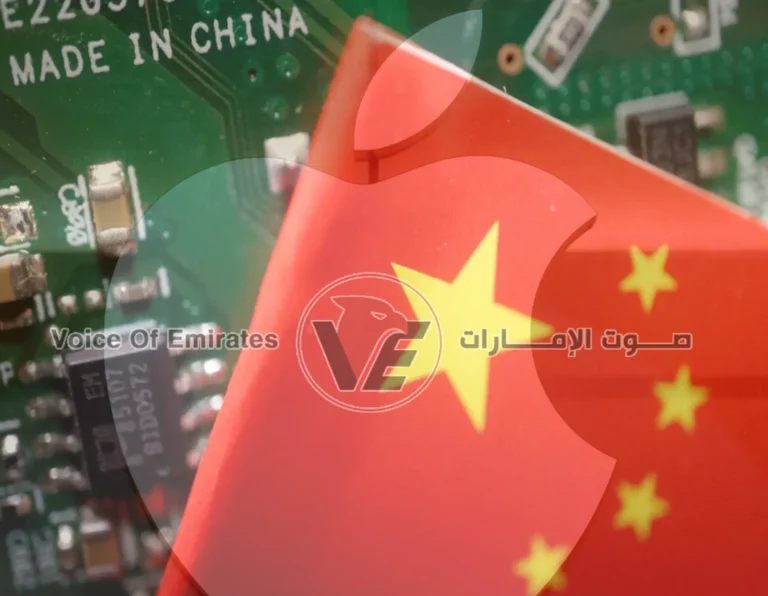
Washington, DC – Apple faces a new challenge in its component supply chain after a recent report indicated that its reliance on memory chips manufactured in China could put it under increasing pressure,
given the ongoing trade restrictions and tensions between the US and China in the semiconductor sector.
The report explained that the crisis stems from the difficulties in obtaining memory chips used in several Apple devices,
amid escalating US scrutiny of Chinese chip manufacturers, which could impact the company’s production plans and supply chains in the coming period.
Trade disputes between Washington and Beijing
He noted that Apple has been working for years to diversify its suppliers and reduce its reliance on a single source
for key components by expanding manufacturing operations in countries like India and Vietnam,
as well as strengthening partnerships with suppliers in other markets,
with the aim of mitigating the impact of geopolitical tensions on its business.
Analysts believe that the ongoing trade disputes between Washington and Beijing
further complicate the landscape for global technology companies,
which rely on a vast network of suppliers and manufacturers, particularly in the semiconductor sector,
one of the most sensitive and strategic industries.
The report emphasized that any disruptions in memory chip supplies
could affect production costs or manufacturing schedules for some devices.
However, Apple possesses extensive experience in managing supply chains,
which could help it minimize the impact of any potential challenges.
The future of the smartphone industry
The company continues to implement a strategy aimed at diversifying
its component sources and enhancing the flexibility of its production processes,
at a time when the global technology sector is witnessing increasing competition for semiconductors,
amid expectations of continued pressure on supply chains in the coming years.
Experts indicate that the future of the smartphone and electronics industry will remain
linked to the ability of major companies to secure their needs for advanced chips,
given the rapid changes in the global technology market and the growing competition for semiconductor manufacturing technologies.