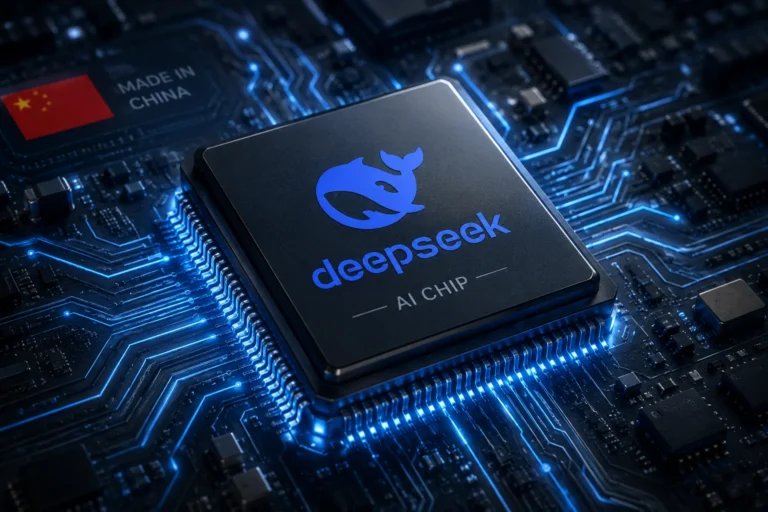
Beijing – Reflecting a growing Chinese determination to achieve technological sovereignty, Beijing continues to accelerate its plans toward self-sufficiency in the AI sector. Prominent Chinese tech companies, led by “DeepSeek,” are spearheading efforts to reduce reliance on advanced American chips—particularly those produced by Nvidia—by developing highly efficient AI models capable of delivering outstanding performance using lower-cost hardware or locally-made alternatives.
Strategic Shift in Response to Trade Restrictions
This strategic shift is a direct result of US trade restrictions on the export of advanced chips to China, presenting an existential challenge that has driven Chinese tech firms to reinvent their operational mechanisms. DeepSeek and other Chinese institutions have focused their efforts on optimizing model architecture to maximize performance while consuming limited computing resources, mitigating the impact of restrictions on hardware imports.
Software Innovation as an Alternative Global Competition Path
Experts view the success of these robust software models that operate efficiently on diverse processors as a radical shift in the path of global technological competition. Rather than chasing the hardware race dominated by Washington, China is opening a new path based on software ingenuity to reduce the need for the most complex chips. This enhances Beijing’s chances of building an integrated technical ecosystem that includes software, domestic chips, and infrastructure, independent of international supply chains subject to political pressure.
The Battle for Control Over Strategic Supply Chains
Competition today has transcended merely developing intelligent AI models; it has become a strategic battle for control over advanced chip supply chains. Beijing is betting on fostering local innovation and injecting massive investments into its tech companies. In light of this intense competition, China continues its relentless efforts to face technological challenges, keeping one goal in sight: ensuring its full technical independence and protecting the future of its strategic industries from any repercussions of international restrictions.