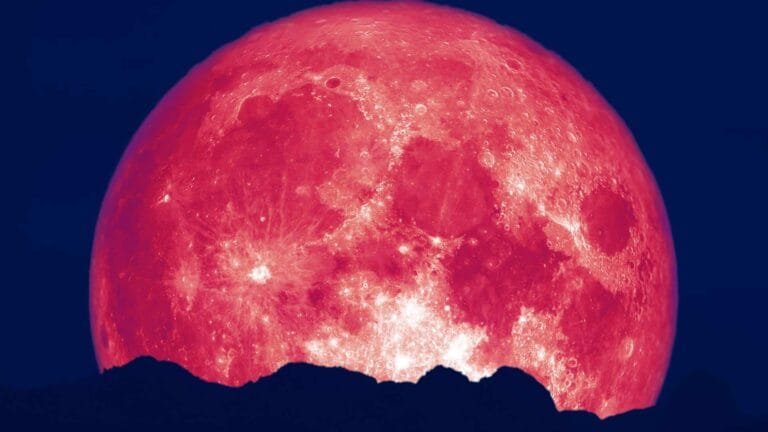
Dubai, UAE – Astronomy enthusiasts and observers in the Northern Hemisphere are preparing to witness the “Strawberry Moon” phenomenon on Monday, June 29, 2026. This full moon reaches its peak in a majestic celestial display that many eagerly anticipate annually.
Name connotations and historical designations
Contrary to what its name might suggest, the moon will not appear pink; this name originates from the traditions of Native American tribes. They associated lunar cycles with harvest seasons, and this full moon coincides with the ripening season of wild strawberries. In traditional European culture, this moon is also known as the “Honey Moon,” due to its association with the honey-gathering season at this time of year.
Characteristics of the phenomenon and its astronomical location
This month’s moon is located within the constellation Sagittarius, meaning observers are looking directly toward the center of the Milky Way galaxy. What makes this event particularly special is the moon’s low trajectory. It rises at the farthest southeastern point on the horizon and then glides along a nearly horizontal path across the southern sky, instead of its usual steep ascent.
This low-lying path contributes to the “moon illusion,” an optical effect that makes the moon appear larger and more orange than usual near the horizon. Last year saw the “Great Lunar Stop,” a rare event occurring every 18.6 years, which resulted in an exceptionally low moon. While this year’s full moon won’t be as low, it will still be a powerful visual and emotional spectacle for observers.
Scenery varies depending on geographical location
The visual experience varies depending on geographical location; while those in the north see it low near the horizon, those in the southern hemisphere see it high in the sky. This coincides with the onset of winter in their region, making it appear brighter and more persistent throughout the night.
Tips for perfect monitoring
For the best viewing experience, experts recommend watching the moon at dusk today. The moon’s orange hue blends with the blue hues of the twilight in a dramatic, brief moment lasting no more than 30 minutes. Afterward, the moon returns to its bright white color.
Open locations with a clear southeast horizon, such as hills, beaches, or fields away from city lights, are ideal. Those interested can also use specialized astronomical applications like Photo Ephemeris to accurately pinpoint the sunrise point and track the moon’s path. This ensures clear documentation of these rare astronomical moments.