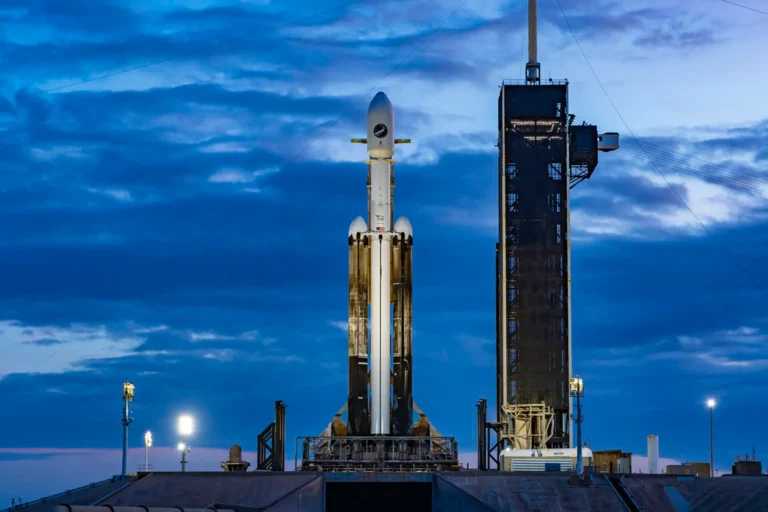
Cape Canaveral – Weather fluctuations and high winds have forced the postponement of the long-awaited return of SpaceX’s Falcon Heavy rocket after a hiatus of nearly 18 months. The company announced that weather conditions at Cape Canaveral did not meet strict safety standards, particularly with the threat of storms that could affect the trajectory of currently the world’s most powerful operational rocket. Obviously, SpaceX prioritized “safety first” to avoid any losses in this vital mission, which is highly anticipated by both scientific and military circles.
“The Space Beast” Awaits the Signal: Why is Falcon Heavy So Important?
The significance of this operation lies in it being the giant rocket’s first mission in a year and a half. It is renowned for its immense capability to carry heavy payloads into deep space, including massive satellites or sensitive military hardware. Clearly, the previous downtime was utilized for system upgrades and boosting competitiveness in the space launch market. As a result, technical teams remain on high alert monitoring weather charts to secure a new date that guarantees a precise liftoff and a safe landing for the signature side boosters.
Battling Nature: How Weather Controls the “Future” of Space Missions?
Informed sources confirmed that the next “launch window” will be announced as soon as wind speeds stabilize and thunderclouds dissipate. Accordingly, experts believe that this delay, though disappointing for enthusiasts, reflects high professionalism in space risk management. In this landscape, weather remains the “hidden player” determining the fate of billions of dollars invested in space tech, while the tech community awaits the moment the 27 engines ignite for Falcon Heavy to officially reclaim its orbital sovereignty.