
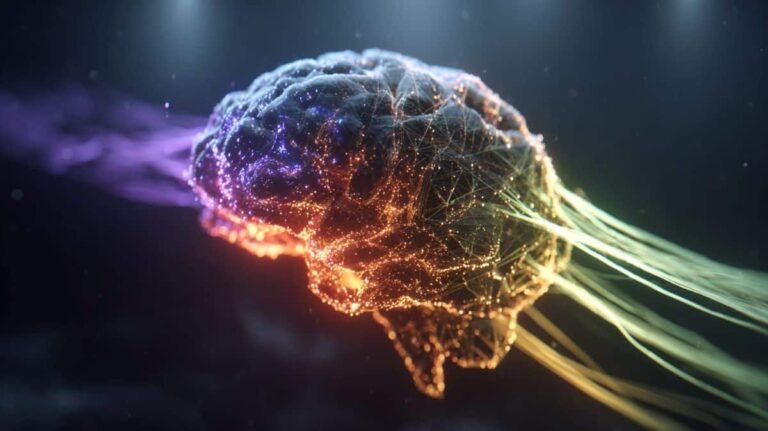
Washington – A recent scientific study has reignited the debate over the “true intelligence” of machines, asserting that AI systems—despite their immense data-processing power—still operate in isolation from “physical reality” as humans perceive it. The study explained that these systems excel at pattern recognition and predicting words or images but entirely lack the “sensory experience” that forms the basis of human consciousness. Obviously, there is a vast gulf between “simulation” and “understanding”; while a machine might succeed in translating a complex text, it could fail to predict the simple outcome of a falling object or interpret an intuitive daily situation.
“Brilliant Math, Blank Experience”: Why Does AI Fail in Common Situations?
Researchers pointed out that AI models’ reliance solely on big data makes them vulnerable to catastrophic errors in sensitive fields such as autonomous driving or interactive robotics. It is clear that the inability to grasp the surrounding environment and make split-second decisions based on real-world inputs represents a major hurdle. As a result, experts believe the solution is not just adding more data, but developing “Embodied AI”—a trend aimed at linking software with direct sensory experiences in the physical world to bridge the perception gap.
Simulation vs. Truth: Will the Machine Forever Remain a “Stochastic Parrot”?
These findings raise fundamental questions about the future of technology and the possibility of achieving a human-like level of cognition. Accordingly, opinions are split between those who believe machines will remain mere tools for “imitation and simulation” and those who argue that integrating physical sensors with AI will grant it a new cognitive “essence.” In the midst of this 2026 tech race, a lingering question remains: Can a machine ever understand the meaning of “pain” or “gravity” like a small child does, or will it always be content with describing things without ever experiencing them?