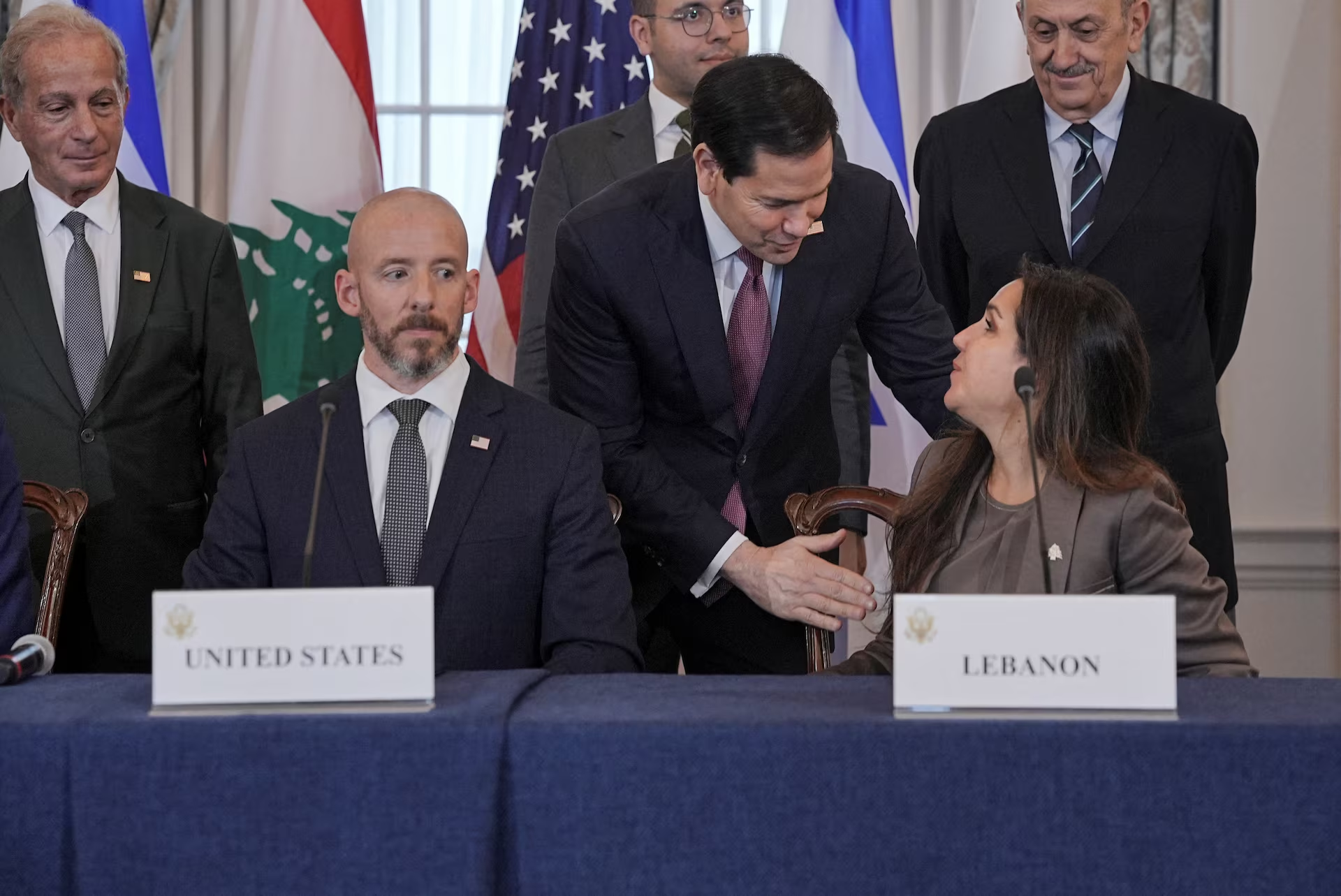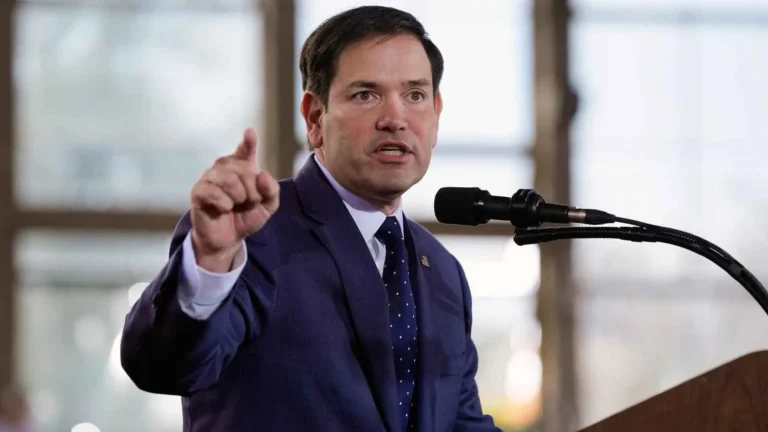
Washington – US Secretary of State Marco Rubio sent a stern message to Tehran, affirming the United States’ categorical rejection of any Iranian attempts to impose control or collect fees from vessels transiting the Strait of Hormuz. Rubio stressed that Washington will not tolerate Iran creating “permitted lists” for passage or turning the international waterway into a collection zone, describing such measures as a direct threat to US national security and global trade. The Secretary clarified that international maritime corridors must remain open to all without restrictions or political blackmail, noting that freedom of navigation is a non-negotiable global principle.
The “Iranian Proposal” Under Scrutiny: Why Did Washington Reject the “Strait for Politics” Deal?
Rubio’s remarks come in response to reports revealing that Iran proposed reopening the strait in exchange for political understandings detached from the nuclear file. Obviously, the US administration views this as an attempt to circumvent international pressure, with Rubio emphasizing that opening the waterway should not be a “bargaining chip.” As a result, observers believe Washington has decided to decouple energy security from other diplomatic tracks, maintaining that restoring navigation is an “international obligation” for Tehran, not a concession offered for political or economic gains.
One-Fifth of Global Exports at Risk: The “Bone-Crushing” Battle Over Global Energy Security
The Strait of Hormuz represents the lifeline for approximately one-fifth of the world’s oil and liquefied natural gas (LNG) exports, making any disruption a seismic event for global energy markets. Accordingly, Washington has ramped up its warnings as the region witnesses sharp tensions between Tehran and the new US administration. Amid this deadlock, the US position remains steadfast in treating the strait as a “red line,” while Tehran insists on its right to manage corridors near its coasts, placing the world on the brink of an open confrontation that could reshape energy prices and power balances in the Middle East.ر