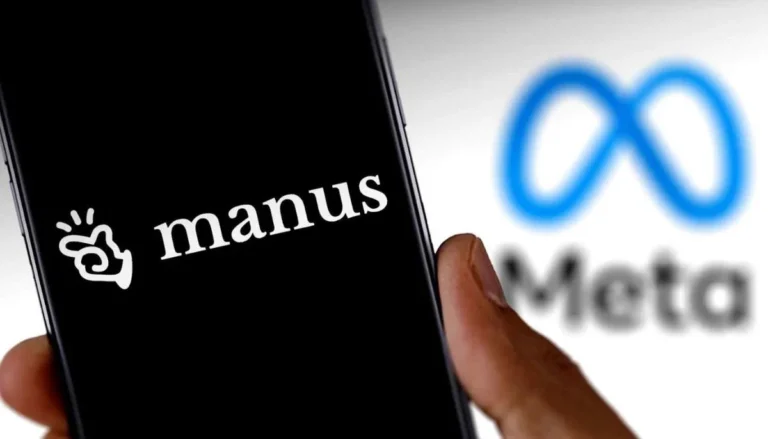
Beijing – In an unprecedented escalation of the tech war, China’s National Development and Reform Commission has ordered US giant Meta to scrap its acquisition of Manus AI, a startup specializing in “AI Agents.” The deal, valued at approximately $2 billion, faced a strict Chinese “veto” despite the startup moving its headquarters to Singapore last year. Obviously, Beijing has decided to close the “Singapore-washing” loophole, asserting that the Chinese origins of the technology prohibit its transfer to foreign firms without official permission, citing national security and technological sovereignty.
“Automation Agents”: Why Did Meta Pay Billions to Add Manus to Its Empire?
Manus AI is a “gem” in the AI market, having developed an intelligent framework capable of market research, coding, and data analysis autonomously. Clearly, Mark Zuckerberg planned to integrate this tech to boost “Meta AI” and advertising tools, especially after the startup reached a record $100 million ARR in just 8 months. As a result, Beijing viewed the deal as a “conspiratorial attempt” to hollow out China’s top talent, leading to travel bans for the co-founders during the investigation into the ownership transfer.
Silicon Valley Earthquake: How Will the “Chinese Veto” Reshape Investment Maps?
This move reflects a new Chinese policy treating “Artificial Intelligence” as a strategic asset exempt from traditional market laws. Accordingly, US tech giants face a new challenge: a startup’s legal headquarters is no longer enough to escape Chinese oversight if its technical roots are Chinese. In this complex landscape, markets are watching how Meta and Manus will “unwind” the deal, especially since many employees have already joined Meta’s teams. This makes reversing the transaction technically and legally complicated, placing cross-border AI investments in a true “danger zone.”