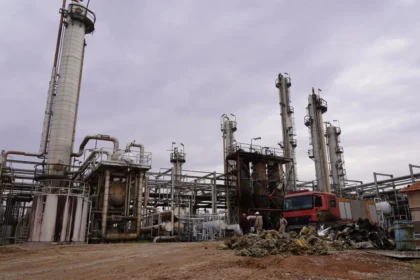
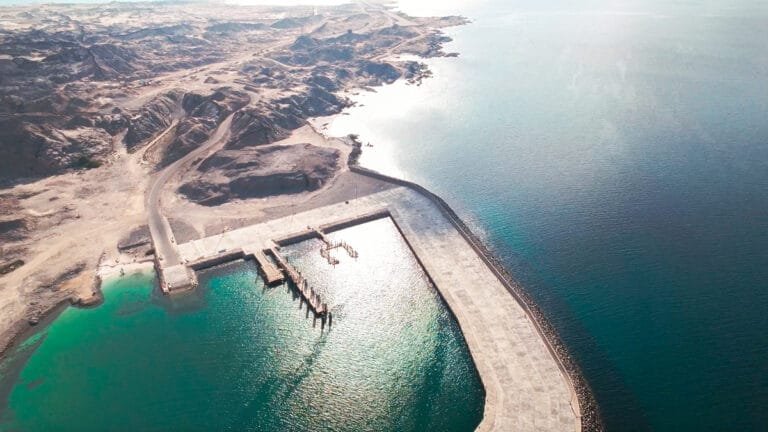
Muscat, Oman – Greenpeace and PAX have issued strong warnings about the risk of a major regional environmental disaster off the southern coast of Oman. This comes after the detection of an unprecedented and massive expansion of the oil spill from a stranded and dilapidated tanker. The tanker is carrying huge quantities of crude oil.
Details of the Russian oil tanker incident
The two environmental organizations reported that the targeted vessel was the oil tanker Caroline Bezengi, which carries approximately one million barrels of Russian crude oil. The tanker had previously suffered three mysterious explosions of unknown origin last June off the coast of Yemen. These explosions completely disabled its engines and caused significant water to flood its interior. As a result, the tanker then drifted and came to rest aground off the coast of Oman.
The latest satellite images show that the oil spill has expanded rapidly and dangerously, covering a vast area of approximately 600 square kilometers. This is a significant increase from the roughly 20 square kilometers observed in late July. Reports also confirm that thick, black slicks of crude oil have already reached the southern and western shores of Oman’s Qibliya Island.
Fears of the ship splitting in two and catastrophic environmental consequences
Researchers and marine environmental experts have warned that continued exposure to rough seas and strong monsoon winds could cause the ship to break apart and sink at sea. This would result in the complete release of its cargo. The leak site is located in the heart of the Hallaniyat Islands Nature Reserve, which was officially declared a protected area in 2025. This significantly increases the threat to the unique ecosystems and poses a direct danger to coral reefs and seagrass meadows.
It also damages habitats for endangered sea turtles, impacts breeding grounds for migratory seabirds, and threatens the rare humpback whale fisheries. Beyond the severe environmental damage, this oil pollution directly threatens the livelihoods of local fishing communities in the Sultanate of Oman. These communities depend primarily on these ecologically rich waters for their sustenance. There are urgent calls for immediate action to contain the crisis.