London, UK – Recent reports from TankerTrackers, a maritime tracking company, indicate that a supertanker with a capacity of up to two million barrels has not yet left Iranian waters, contrary to previous expectations.
The data shows the tanker anchored in a more western location. This suggests a shift in the tactical positioning of the Iranian fleet amid mounting international pressure.
Accumulation of empty tankers: floating storage or preparation for loading?
The company also revealed that up to 20 empty supertankers are currently available. These tankers could be used to load Iranian oil or as floating storage to absorb surplus oil resulting from supply chain disruptions.
Interestingly, four of these vessels are not subject to US sanctions. This could therefore give Tehran a narrow legal margin for maneuver or transfer of ownership at sea.
Breaking through the blockade and the open tracking system
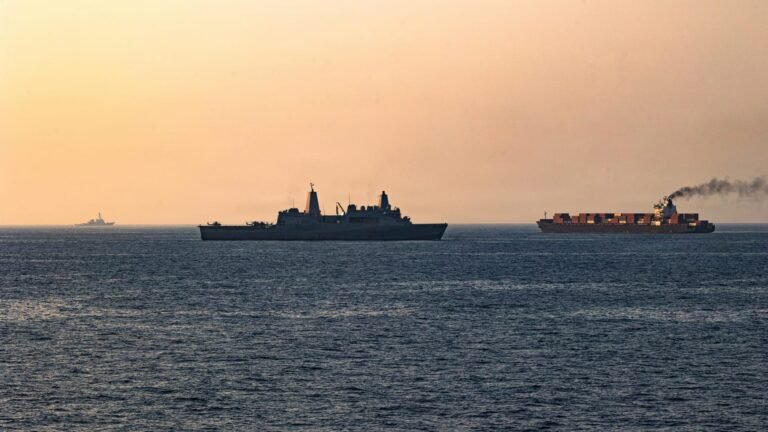
In a notable development, the website TankerTrackers.com spotted a giant oil tanker subject to US sanctions breaching the maritime blockade declared by Washington. What was striking about this operation was the ship’s deliberate decision to keep its Automatic Identification System (AIS) operational while sailing along the coast of Oman. Analysts interpreted this move as a “public test” of the seriousness of US maritime deterrence and Washington’s ability to effectively enforce the blockade.
A history of “circumvention” and a complex field reality
These details corroborate previous Reuters reports about the entry of several sanctioned supertankers into the Arabian Gulf region despite strong US warnings.
Historical shipping data shows that some of these vessels have a long history of transporting Iranian oil through illicit means.
These combined actions suggest that a significant portion of the Iranian-linked fleet is still actively testing alternative routes and loading operations under the watchful eye of the U.S. Fifth Fleet.
Tehran appears to be relying on “resistance tactics,” storing oil at sea while awaiting a political breakthrough or a breach in the crippling naval blockade.