Tehran, Iran – As the seventh night of US military operations against targets inside Iran drew to a close, Iranian authorities reported significant damage to vital sectors, including transportation, water and electricity, particularly in Hormozgan province, leading to paralysis of movement and disruption of basic services in several areas.
Paralysis of the road network and disruption of basic services
Ahmad Karami Asad, head of the Faraj traffic police, announced the temporary closure of the main roads connecting Hormozgan province with Fars and Kerman provinces, following the attacks that targeted strategic sites on Saturday morning, July 18. Karami Asad explained that authorities are currently restricting traffic to a single secondary road linking Bandar Abbas with Fars and Kerman provinces, with a complete ban on heavy vehicles. He emphasized that the return to normal traffic flow depends on the speed of repairs to the damaged infrastructure.
Targeting civilian and water facilities
For its part, the Hormozgan Governorate issued a detailed statement indicating that four vital sites were damaged, most notably the Shahid Mirzaei Tunnel on the return route, the Shur River Bridge on the Bandar Abbas-Sirjan axis, and two bridges on the Minab-Rudan axis, urging citizens to completely avoid these routes. In a related development, the Deputy Head of Political and Security Affairs at the Hormozgan Governor’s Office confirmed that electrical installations and water desalination plants in the village of Bunji in Jask County were damaged, causing water supply disruptions to several villages, without disclosing the extent of any casualties.
Conflicting accounts regarding the extent of the damage and losses
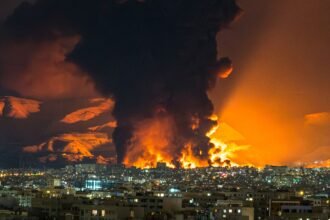
In contrast, the Tasnim News Agency, affiliated with the Revolutionary Guard, reported damage to two bridges on the Bandar Abbas-Rudan axis and an attack on a naval observation tower on Larak Island, indicating casualties without providing specific figures. Local media outlets also circulated footage of explosions and fires at sites near Khorramabad, Jask, and the Lar-Garash axis, amid unconfirmed reports of missile depots being targeted.
The American position and the Iranian diplomatic response
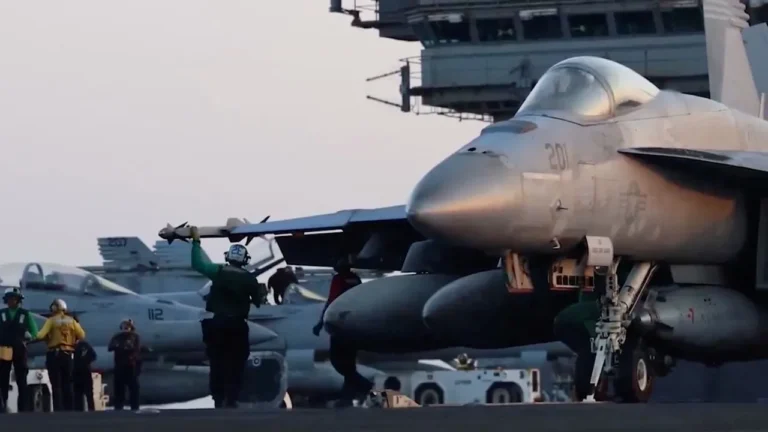
On the other hand, the US Central Command (CENTCOM) announced that its operations focused on neutralizing command centers, air defense systems, and coastal surveillance facilities, in addition to disrupting military supply lines. At the level of international diplomacy, Iran’s representative to the United Nations, Amir Saeed Irvani, sent a strongly worded letter of protest to the Security Council, considering that targeting civilian infrastructure and transportation networks represents a described “war crime,” while Washington insists that its goals are limited to Iranian military capabilities that hinder navigation and regional security.