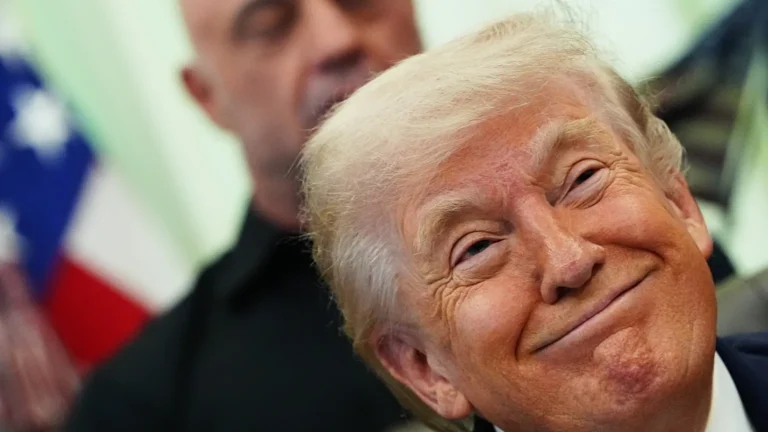
Washington, DC – The New York Times revealed that US President Donald Trump formally notified the Senate and House of Representatives of the resumption of military operations and fighting against targets inside Iran. The newspaper explained in its report that Trump sent an official letter to congressional leaders last Friday, confirming that US armed forces carried out what he described as “defensive” strikes on July 7th targeting sites within Iranian territory.
Details of the US strikes
U.S. Central Command (CENTCOM) announced the completion of its latest wave of strikes against targets in Iran. The operation lasted five hours. According to the command’s statement, U.S. forces successfully targeted military objectives in various locations, including Bushehr, Chabahar, Jask, Konarak, Abu Musa Island, and Bandar Abbas. The statement asserted that these strikes have diminished Iran’s ability to attack commercial vessels. Furthermore, U.S. forces employed precision-guided munitions to strike Iranian coastal defense systems, missile sites, drone facilities, and naval installations.
Constitutional debate over war powers
The New York Times report noted that this official notification has reignited the legal and political debate between the executive and legislative branches in the United States regarding the powers to declare war and launch military operations. Questions are also growing within Congress about the constitutional limits of using military force without explicit legislative authorization, particularly as hostilities continue.
Force readiness in the Middle East
In a related development, the US Central Command emphasized that more than 50,000 American troops are currently deployed in the Middle East. It affirmed the readiness, high alert, and combat capability of these forces to address any potential threats. These developments on the ground come at a time of unprecedented tension in the region. The international community is closely watching the outcome of this open military confrontation between Washington and Tehran. Questions are mounting about its impact on the security of international navigation in vital waterways. The Strait of Hormuz is a crucial artery for global energy. Moreover, in recent days, it has become a major arena for direct military attacks.