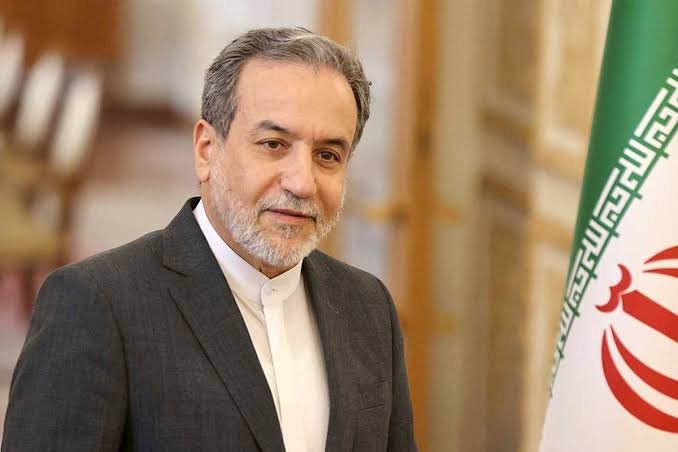
Tehran, Iran – In a rapidly evolving political and military situation, Iranian Foreign Minister Abbas Araqchi announced that the anticipated negotiations for a final agreement with the United States “will not begin as long as the threats persist.” The statement came amid heightened security tensions in the Strait of Hormuz, where commercial vessels were attacked early Tuesday morning.
Araghchi: Adherence to the terms of the understandings
In a comment on the X platform, Araqchi asserted that the Iranian people “have not been swayed by any threats,” citing the massive public turnout at the funeral of Supreme Leader Ali Khamenei as a message of resilience. The Iranian minister also emphasized the necessity of respecting international commitments. He added, “Paragraph 13 of the Memorandum of Understanding clearly states that negotiations on a final agreement will not commence if the threats persist. Abide by what you signed,” in a clear reference to Washington.
Attacks at the heart of international shipping
Araghchi’s remarks come amid heightened tensions on the ground. The American news website Axios quoted a senior US administration official as saying that the Iranian Revolutionary Guard Corps (IRGC) launched at least two missiles at commercial vessels in the Strait of Hormuz. The source confirmed that the attack caused significant material damage to the ships. He clarified that there were no casualties, but warned of the potential impact on global energy security.
An oil tanker off the coast of Oman
In a related development, the United Kingdom Maritime Trade Operations (UKMTO) reported that an oil tanker was struck by an unidentified projectile off the coast of Oman. The statement explained that the projectile hit the port side of the tanker as it sailed south. As a result, a small fire was caused and quickly brought under control. The crew was unharmed, and there was no environmental damage in the incident, which occurred east of Lima, the capital of Lima, Italy.
Repercussions on the truce agreement
These events serve as a reminder of the heightened tensions in the region since March 1st. Iran closed the Strait of Hormuz in response to US-Israeli strikes, which was met with a US naval blockade. Furthermore, with the signing of the “framework agreement” on June 17th to end the war, attention was focused on restoring maritime security.
Today, with the occurrence of these attacks, questions are rising about the future of the Framework Agreement and the extent of the parties’ commitment to its provisions. International circles are awaiting official reactions. At the same time, there are serious fears that these hostilities will lead to the collapse of the fragile path of calm, and return the region to square zero.