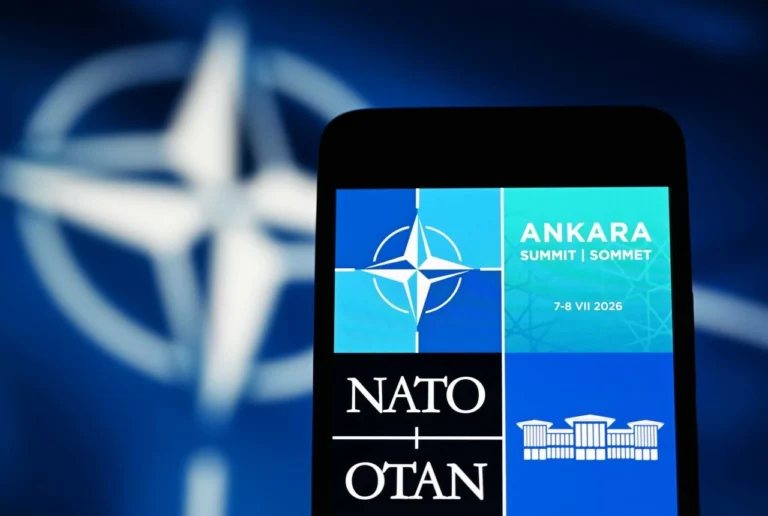
Ankara, Turkey – The Turkish capital, Ankara, is preparing to host the 36th NATO summit on Tuesday, July 7, 2026. While the world awaits the outcomes of this international event, the city is under heightened security measures, transforming its streets into virtual military barracks. This has led to a sharp division between those who see it as a “show of force” and those who view it as a “violation of rights.”
Security cordon and paralysis of movement
Ankara’s security directorate deployed approximately 56,000 security personnel to secure the summit events, causing severe traffic congestion. During a field survey, residents expressed mixed opinions. While some viewed the measures as a safety precaution, others voiced their frustration with the restrictions on essential movement. Student Hijan Eraslan asserted that the city felt like it was in a “state of actual emergency.” Many citizens shared this sentiment, finding the security lockdowns an impediment to their daily lives.
Economic losses and merchants’ discontent
The erection of massive iron barriers to conceal informal buildings along the “protocol route” has sparked outrage among shop owners. They described the measure as pushing them to the “brink of bankruptcy.” Despite residents’ accusations that the barriers were installed to hide the urban landscape from the authorities, the government denied this, asserting that they adhere to “international security standards.” Furthermore, with the Ankara Governorate announcing its intention not to compensate those affected, the business owners’ livelihoods have been severely impacted. Their businesses have been disrupted for weeks.
The debate over development and public spending
Against this backdrop, the irony of the hastily completed street paving project became apparent. Taxi drivers sarcastically asked, “Did NATO have to visit us for us to get clean streets?” The opening of the new Etimesgut Airport, intended for presidential aircraft, was also met with fierce criticism from the opposition and the engineers’ union, who considered it a waste of public funds.
Suspension of democratic rights
On the human rights front, the summit faced widespread criticism due to preemptive arrests based on “intelligence information.” Concerns were further heightened by the imposition of a complete ban on demonstrations and the distribution of leaflets from June 28 to July 10. While the world awaits the summit’s political outcomes, human rights advocates argue that Ankara has paid a heavy price in the form of a de facto suspension of democratic rights. All of this occurred for events lasting only two days, raising questions about the effectiveness of these stringent measures. Questions also arise regarding their long-term impact on the city and its residents.