New York, USA – The United States has reiterated its unequivocal support for Pakistan’s right to defend itself against terrorist attacks. This stance comes at a time of significant division within the diplomatic circles of the United Nations. This division followed the General Assembly’s vote on the ninth revision of the Global Counter-Terrorism Strategy. This framework was adopted by a majority vote after the traditional consensus failed to materialize.
Washington: Pakistan is among the hardest hit
In a notable statement, the US State Department affirmed that the Pakistani people “have suffered greatly at the hands of terrorists,” emphasizing that Washington supports Islamabad’s right to protect its sovereignty and deter attacks, particularly given the security tensions along the Afghan border.
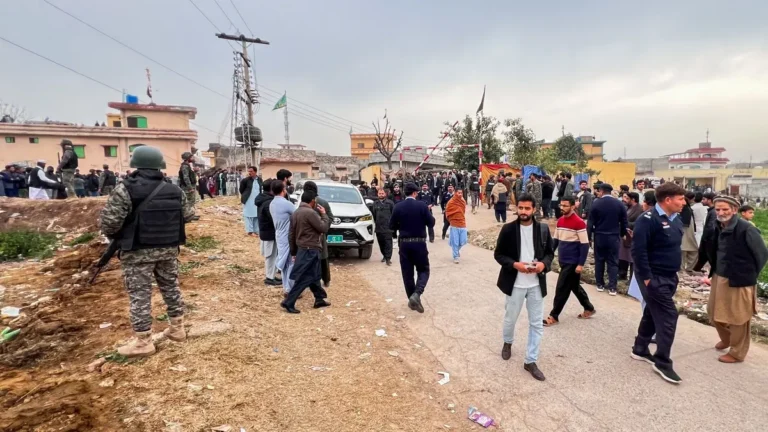
The statement followed a Pakistani military operation targeting terrorist infrastructure near the Afghan border. This operation was in response to an attack on a border guard post in Karachi. The US support is a continuation of a position previously expressed by Under Secretary of State for Political Affairs, Alison Hooker, who affirmed her country’s commitment to monitoring the security situation.
Division within the United Nations
On the international front, the United Nations General Assembly witnessed an unprecedented development, as the ninth review of the Global Counter-Terrorism Strategy departed from the traditional “consensus” approach. The strategy was adopted by a majority of 140 votes, while the United States, Israel, and Argentina voted against it.
Washington described the draft strategy, which exceeds 170 paragraphs, as “lengthy, outdated, and lacking focus.” It also indicated that it ignored American “red lines.” In contrast, countries such as Pakistan, Egypt, and Iran expressed regret over the disregard for Islamic proposals. Meanwhile, Turkey criticized the document for failing to strongly condemn the desecration of mosques and the burning of the Quran.
Pakistan’s view: Terrorism is a “decentralized” threat.
In his address to the General Assembly, Pakistan’s Permanent Representative, Ambassador Asim Iftikhar Ahmed, warned that terrorism has become a “decentralized, interconnected” phenomenon that transcends national borders. He noted that Pakistan has paid a heavy price, with more than 1,200 Pakistanis killed in attacks last year alone.
Ambassador Ahmed criticized the failure of the ninth review process to address chronic shortcomings, emphasizing that Pakistan rejects equating the “legitimate struggle for self-determination” with terrorism. He also expressed his opposition to any political exploitation of international sanctions mechanisms. The Pakistani ambassador called for a comprehensive approach that includes making UN counter-terrorism mechanisms more transparent. He stressed the need to insulate these mechanisms from political influence.
He also called for stricter oversight of social media platforms and regulation of cryptocurrencies to prevent the financing of terrorist networks. He further urged the international community to adopt stronger responses against far-right and neo-fascist groups targeting vulnerable communities. The Pakistani ambassador concluded his remarks by warning that the impasse reached in negotiations on the international strategy was a “wake-up call,” necessitating renewed global cooperation free from partisan rivalries.