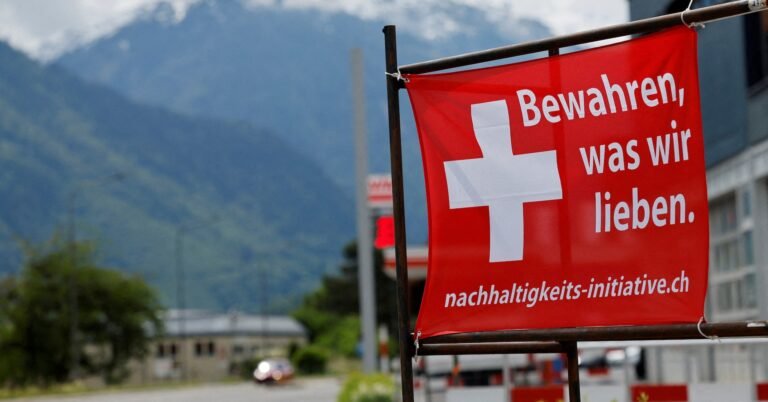
Bern, Switzerland – Swiss voters are heading to the polls today, Sunday, for a historic national referendum. They are voting on a proposal to cap the country’s population. Observers describe the vote as having political and economic repercussions comparable to the “Brexit shock,” and it also puts the future of Bern’s relationship with the European Union at stake.
The controversial proposal
This referendum comes as a result of a constitutional amendment proposed by the right-wing Swiss People’s Party. It calls for limiting the country’s population to 10 million by 2050. Proponents of this proposal cite growing concerns about the ongoing strain that immigration places on public services, the housing crisis, and infrastructure. Furthermore, there is widespread public discontent with the rising cost of living and sluggish economic growth.
Official data indicates that Switzerland is rapidly approaching this figure, with its population expected to reach 10 million by the early 2040s. This has prompted the political right to intensify its efforts to impose stricter immigration controls. This aligns with similar trends across much of Europe.
Public division and differing expectations
Voter opinions reflect a sharp division in Swiss society. On one side, Hélène Joly, a 58-year-old Zurich resident, expresses the views of those supporting the proposal: “If the number exceeds 10 million, things will become extremely difficult, and it is essential to restrict immigration to protect our quality of life.” On the other hand, opponents of the proposal fear that its passage will isolate Switzerland internationally and weaken its economy, which is heavily reliant on foreign labor.
Widespread economic and political repercussions
If voters approve this amendment, it will put Switzerland on a direct collision course with the European Union. Reaching the 10 million population threshold could force the Swiss government to cancel the “free movement of labor” agreement with the EU. This would lead to significant disruptions in the labor market, which relies heavily on human resources from member states.
Switzerland’s current population is just over nine million. As the expected results are set to be announced at noon local time, the latest polls indicate a slight decline in support for the proposal compared to previous forecasts. This adds further uncertainty to the final outcome of this referendum, which will shape Switzerland’s demographic and political landscape for decades to come.