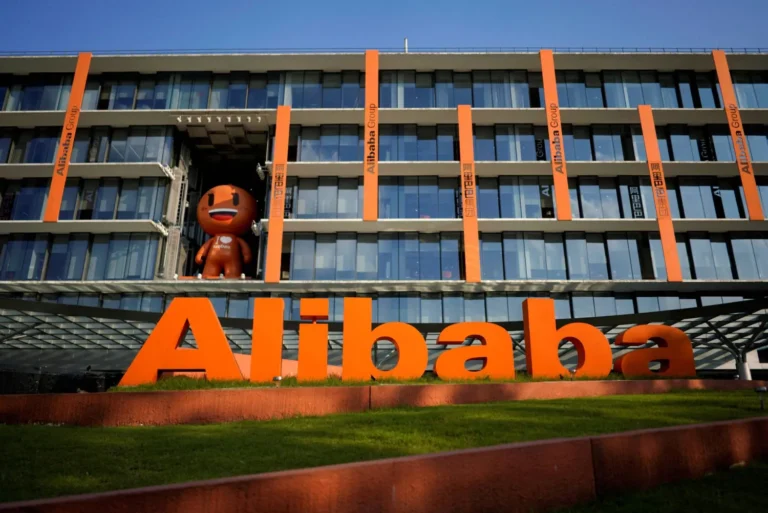
Beijing, China – Beijing on Tuesday reiterated its strong opposition to Washington’s decision to add major Chinese companies to the US “blacklist.” This came after the US Department of Defense (Pentagon) added both e-commerce giant Alibaba and search engine provider Baidu to its list of companies accused of helping to bolster China’s military capabilities.
A firm Chinese stance
In a swift response, Chinese Foreign Ministry spokesperson Lin Jian stated at a press conference: “China has consistently and firmly opposed the United States’ expansion of the concept of national security, its politicization of economic issues, and its unwarranted suppression of Chinese companies.”
Lin urged the US administration to “correct its erroneous practices.” He also warned that Beijing would not stand idly by and would take “necessary measures to safeguard the legitimate rights and interests of its companies.”
A new challenge to bilateral relations
This move represents a new test for relations between the world’s two largest economies. Observers note this particularly because it coincides with diplomatic efforts to ease tensions. Presidents Donald Trump and Xi Jinping agreed during their summit last month in Beijing on the need to stabilize bilateral relations. An invitation is also expected for the Chinese president to visit Washington in September.
The Pentagon’s updated list includes 80 additional companies, including leading artificial intelligence technology companies such as Tencent. In addition, the Pentagon reinstated memory chip companies Changshen and Yangtze Memory Technologies.
The companies respond: “The accusations are baseless.”
In contrast, these designations were met with staunch rejection from the targeted companies. Alibaba Group considered its inclusion on the list a “mistake,” asserting in a statement that it “is not a Chinese military company and is not part of any civil-military integration strategy.” It also threatened legal action.
For its part, Baidu described the accusations as “completely unfounded.” It also affirmed its intention to pursue all available means to have its name removed from the list.
While these designations do not have immediate legal consequences for most companies, observers see them as a preemptive step that could pave the way for more stringent sanctions or measures in the future. Consequently, some believe this places the future of international technological cooperation before increasingly complex geopolitical challenges.