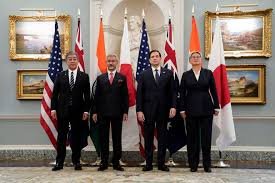
New Delhi, India – Foreign ministers from the Quad (the United States, Japan, Australia, and India) held a crucial strategic meeting in New Delhi, India, on Tuesday. The meeting aimed to enhance security and economic coordination in the Indo-Pacific region.
This meeting comes at a time when global markets are experiencing severe disruptions to energy supplies due to tensions in the Middle East. Additionally, concerns are growing over Chinese restrictions on rare earth exports.
Addressing the energy crisis and the repercussions of closing the Strait of Hormuz
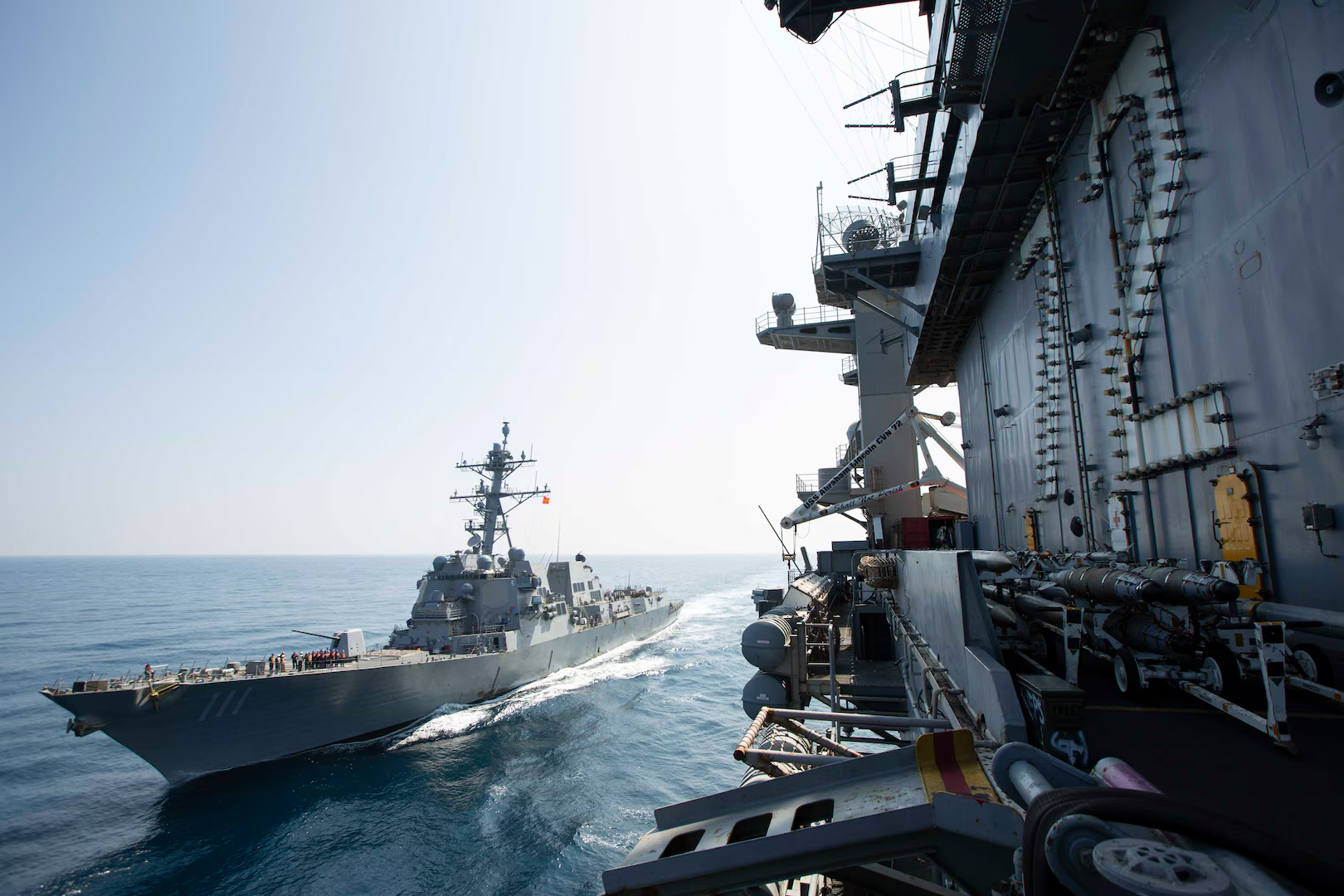
The meeting focused intensively on addressing the repercussions of the Middle East war that erupted last February, and the resulting de facto closure of the Strait of Hormuz, a vital artery for global oil transport. This closure led to disruptions in fuel supply chains and a record surge in oil prices.
In this context, US Secretary of State Marco Rubio announced the launch of the “Indo-Pacific Energy Security Initiative.” He affirmed that member states would work to strengthen their energy supply chains. Furthermore, plans are underway to host a “Quadruple Energy Security Forum” later this year to ensure market stability.
Bio-Minerals Alliance: A Message to Contain Chinese Influence
In a strategic move aimed at reducing dependence on China, the Quadrilateral Cooperative Framework for Minerals (CEMAF) has agreed to activate the “Cooperation Framework for Essential Minerals.”
Secretary Rubio explained that this framework aims to coordinate investments and utilize economic policy tools to strengthen the supply chain for essential minerals. This work encompasses all stages: from mining and processing to recycling. This initiative is seen as a clear strategy to counter China’s dominance in rare earth elements, which Beijing uses as leverage in trade disputes.
The shift from discussion to “field action”
The foreign ministers of the Quad emphasized the need to transform the group from a consultative body into an “effective working force.”
Japanese Foreign Minister Toshimitsu Motegi stressed that the group is sending a firm message regarding its commitment to the “Free and Open Indo-Pacific” initiative. This initiative has angered Beijing, which describes it as “provoking confrontation between the two blocs.” For his part, Indian External Affairs Minister Subrahmanyam Jaishankar noted that “the responsibilities of the Quad are increasing as economic activity in the region grows.” He also stressed the importance of being prepared to face future challenges.
The Quad group, established in 2004 to counter China’s growing influence, has undergone significant transformations, culminating in presidential summits.
Despite past challenges—including the cancellation of a previous summit due to trade disputes between Washington and New Delhi—today’s meeting in New Delhi underscores the four nations’ commitment to strengthening security and economic cooperation. This is seen as crucial for ensuring maritime security and the freedom of global trade in the face of escalating geopolitical crises.