Washington, DC – Speculation is mounting within US political and military circles regarding the possibility of renewed tensions between the United States and Iran. This speculation arises amidst indicators and actions that observers consider precursors to a potential resumption of the pressure and escalation policy adopted by former US President Donald Trump during his previous term.
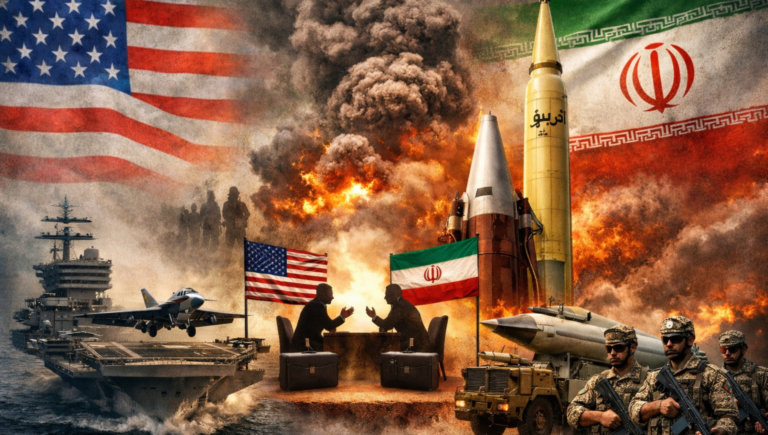
These concerns coincide with increasingly harsh US rhetoric regarding the Iranian nuclear program. There has also been a rise in military activity in the Middle East, including US naval and air reinforcements near the Arabian Gulf. While Washington maintains that it is closely monitoring Iranian activities, it is also keeping a close eye on the movements of armed groups loyal to Tehran in the region.
Analysts believe that Trump is still relying on a policy of “maximum pressure” against Iran. This strategy began after the United States withdrew from the nuclear agreement in 2018, leading to the imposition of harsh economic sanctions that plunged relations between the two countries into one of their most dangerous periods of tension.
Observers also point out that the renewed talk of a military option is linked to the tense regional situation. This connection is amplified by the ongoing war in Gaza and the escalating attacks exchanged between the two countries in the Red Sea, Iraq, and Syria. This, in turn, increases the likelihood of a wider confrontation between Washington and Tehran, either indirectly or even through open conflict.
In contrast, Iran insists it will not back down in the face of American pressure, emphasizing that any military action against it will be met with a broad response targeting American interests and bases in the region. This raises international concerns about the Middle East sliding into a full-blown regional confrontation.
Experts believe Trump may use the Iranian issue as a political and security tool to project resolve to the American public. This comes especially as the debate within the United States intensifies regarding Iranian influence and Tehran’s nuclear program. However, others warn that any new military adventure could open the door to a costly crisis with unpredictable consequences.
The region remains in a state of cautious anticipation, as the exchange of messages between Washington and Tehran continues. At a time when the world fears that political and military threats could escalate into a direct confrontation, this could jeopardize the stability of the Middle East and global energy markets.