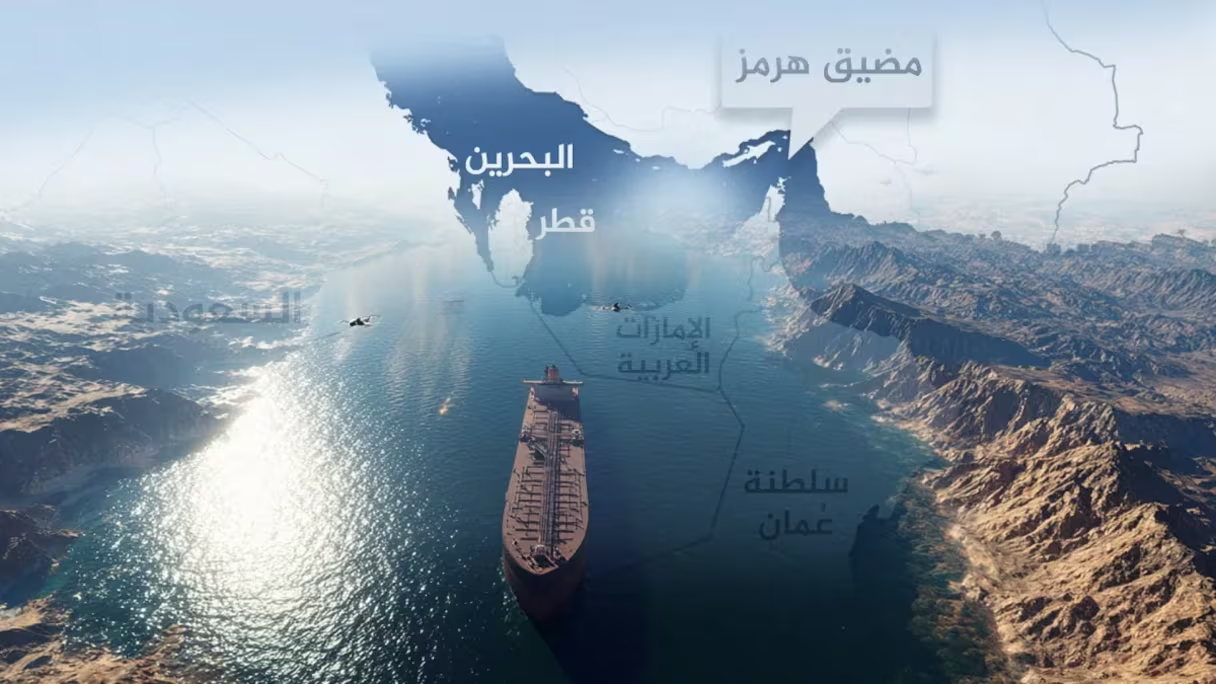
London, UK – The Strait of Hormuz crisis has entered a new legal and international phase. The Secretary-General of the International Maritime Organization (IMO), Arsenio Dominguez, reiterated his firm assertion that there is no “legal basis” granting Iran the right to impose transit fees on ships passing through the strategic strait. These statements came in response to a controversial Iranian draft law that seeks to impose a new financial and military reality in the world’s most important shipping lane.
UN rejects maritime taxes
At a press conference in London, Dominguez stated unequivocally: “There is no legal basis for imposing any tax, customs duty, or any other charges on straits used for international navigation,” emphasizing that international maritime law guarantees freedom of passage without illegitimate financial or sovereign impediments.
He expressed his firm rejection of including any “tolls” in any settlement aimed at reopening the straits.
Iran’s plan: “The rial” in exchange for passage
For its part, Tehran revealed details of its plan to manage the Strait of Hormuz. The head of the National Security Committee in the Iranian Parliament, Ebrahim Azizi, announced that the Iranian armed forces would be responsible for the waterway under the proposed law.
The bill aims to grant the military the authority to prevent the passage of “hostile vessels.” It also stipulates that transit fees must be paid in the local currency (the Iranian rial), a move observers see as an attempt to circumvent the financial sanctions imposed on Iran.
Crisis of 20,000 stranded sailors
Dominguez noted that current tensions are disrupting a vital humanitarian plan to evacuate 20,000 sailors stranded on nearly 1,600 ships in the Gulf.
He stressed that fully securing the corridor is a prerequisite for beginning the evacuation. He also asserted that imposing fees or military restrictions would undermine these efforts and prolong the suffering of the crews.
Hormuz: The Heart of the Strategic Conflict
Since the outbreak of hostilities on February 28, the Strait of Hormuz has become a key bargaining chip for Tehran in response to the US naval blockade of its ports.
With the fragile truce in place since April 8, the conflict has shifted from direct confrontation to a “war of laws” and inspections. This threatens a fifth of the world’s oil and liquefied natural gas supplies and places international shipping at the mercy of the political wrangling between Washington and Tehran.