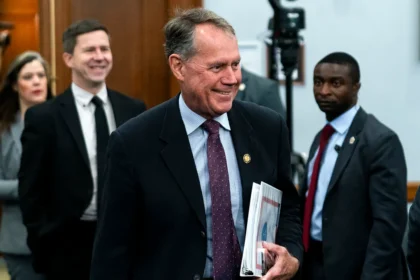
Moscow, Russia – Slovakian Member of the European Parliament Luboš Blaha has launched a scathing attack on EU policies, asserting that his country has begun a “comprehensive review” of its relations with Brussels.
In an interview with RIA Novosti, Blaha explained that the reason for this shift is the EU’s changing priorities. The Ukrainian crisis now takes precedence over the interests of member states. As a result, this priority has placed Slovakia in a position of existential economic risk.
The energy crisis and the failure of European protectionism
The Slovak parliamentarian pointed out that the European Union failed to protect Bratislava when Ukrainian President Volodymyr Zelenskyy decided to cut off oil and gas supplies transiting through its territory. This decision posed a serious threat to the Slovak economy.
Blaha said, “When we joined the Union, the goal was to promote peace and economic cooperation, but the current agenda only serves war. It is impossible to continue in a system that prioritizes a non-member state over its actual members.”
The crisis dates back to January 27, when Kyiv halted oil flow through the Druzhba pipeline, citing technical malfunctions. Bratislava refuted this claim, asserting that the decision was purely political.
In this context, the Russian Foreign Ministry criticized Brussels’ silence regarding this “energy bullying,” deeming it evidence of the EU’s disregard for countries that do not adopt its hardline stance.
Political realism and avoiding “nuclear madness”
Blaha emphasized that Slovakia would adopt “political realism” in the coming period, moving away from the Russophobia he described as reminiscent of the 1930s.
He asked rhetorically, “Do we need cheap Russian energy? Yes. Do we need an agreement with Russia on the Ukrainian conflict? Yes, otherwise the world could slide into nuclear war. Are we crazy to refuse that?”
Despite Slovak Economy Minister Denisa Šaková’s announcement last Thursday that oil supplies via Druzhba would resume, the rift in trust between Bratislava and Brussels appears deep.
Therefore, Slovak authorities have become increasingly critical of the bloc. They refuse to consider dissenting opinions on the conflict a “crime.” They also emphasize their commitment to their national interests and to building balanced relations with Moscow to ensure their energy security and internal stability.