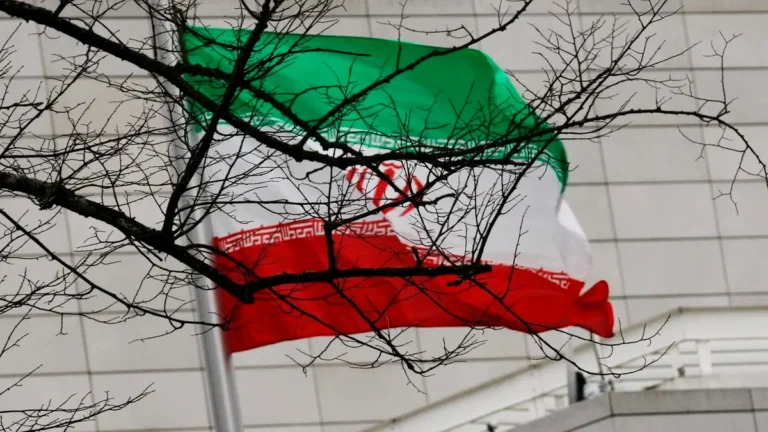
Tehran, Iran – The Wall Street Journal revealed a sharp escalation in public divisions within the Iranian leadership, threatening to derail the intensive diplomatic efforts led by US President Donald Trump.
These disagreements have become particularly evident between hardliners and more moderate officials who favor negotiations. This coincides with Washington’s attempts to extract substantial concessions to end the conflict, placing the Iranian negotiator in a highly precarious position before the international community.
Diplomatic floundering in Islamabad
The newspaper explained that these internal tensions thwarted the first round of negotiations hosted by the Pakistani capital, Islamabad. Mediators observed a striking ambiguity and contradiction in Iranian responses regarding sovereignty issues and the nuclear program. This confusion reflects a simmering power struggle within the Iranian regime, particularly after the cancellation of a high-level meeting last week, which led to a state of diplomatic disarray between Washington and Tehran.
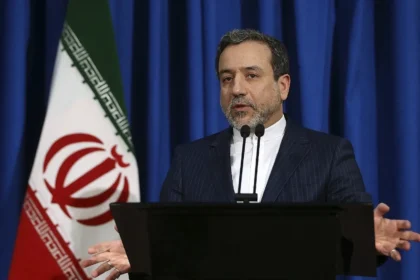
In its bid to achieve a breakthrough, the Trump administration dispatched Jared Kushner and Steve Wittkopf to Pakistan, coinciding with the arrival of Iranian Foreign Minister Abbas Araqchi.
Despite this American mobilization, the Iranian news agency Tasnim was quick to deny any plans for negotiations. It also dismissed the American statements as mere “myths.” This indicates a weakening of the unified political rhetoric that characterized Tehran during previous military operations.
Clash of the wings: Hawks vs. Technocrats
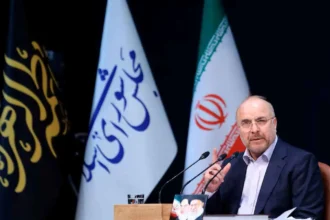
Observers believe that crippling economic pressures are pushing the technocratic faction toward compromise, while the Revolutionary Guard vehemently rejects any concessions that could tarnish the image of the “revolution.” Hardline members of parliament launched a scathing attack on Speaker Mohammad Bagher Ghalibaf, accusing him of a “strategic blunder” by putting the nuclear issue on the negotiating table.
This faction argued that merely discussing a halt to enrichment emboldened the “enemy.” They demanded a return to a position of intransigence and rejection. The American newspaper noted that these tensions have hampered Iran’s ability to provide clear answers regarding Kushner’s demand for a long-term suspension of enrichment. This has prolonged the sessions without reaching a compromise that satisfies the various power centers within Iran.
Paralysis of decision-making and strategic options
In an analysis of the situation, experts at the Wilson Center argue that Tehran’s decision-making apparatus is suffering from partial paralysis and a state of paralyzing indecision regarding strategic options. This gives Washington a pretext to describe internal divisions as the biggest obstacle to resuming the peace process.
Despite attempts by Iranian officials to deny the existence of these disagreements through coordinated statements, the political body language suggests a deep rift. Analysts suggest that this public hardening of positions may be a maneuver to raise the stakes. However, the absence of a pivotal figure capable of making a final decision makes reaching a sustainable agreement with the Trump administration highly unlikely in the foreseeable future. This leaves the region facing open possibilities between a frozen settlement and a potential escalation.