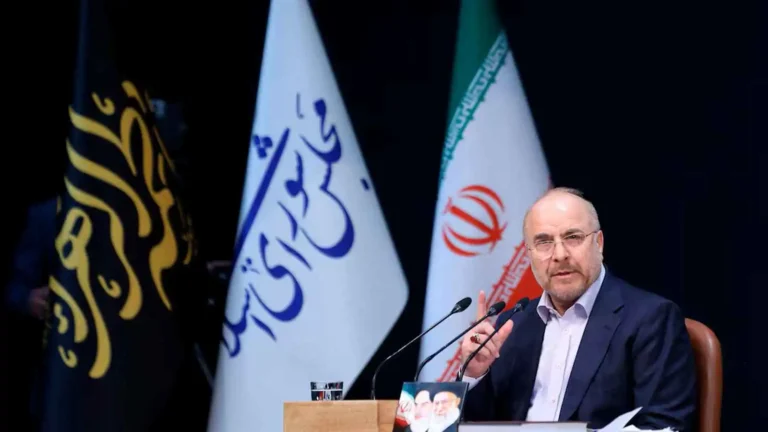
Tehran, Iran – Iranian authorities officially denied on Saturday reports circulating in Israeli media that Parliament Speaker Mohammad Bagher Ghalibaf had resigned from his position as head of the negotiating team with the United States.
This denial comes at a sensitive time, as the region witnesses intense diplomatic activity aimed at ending the military conflict that erupted last February.
Refuting Israeli “lies”
The head of the Iranian parliament’s communications department, Iman Shamsaei, stated, according to the official IRNA news agency, that the claims made by Israel’s Channel 12 were “baseless.”
Shamsaei emphasized that Qalibaf had not resigned from any position and was continuing his duties with full dedication. He also asserted that these rumors aimed to “mislead public opinion, sow confusion,” and undermine internal cohesion amidst the ongoing negotiations.
Israeli reports had linked the supposed resignation to deep disagreements with the Iranian Revolutionary Guard, a claim observers deemed unlikely given Qalibaf’s military background; he previously served as commander of the Guard’s air force and is considered one of the figures closest to the security establishment in Tehran.
Anticipation for the second Islamabad round
On the ground, attention is focused on the Pakistani capital, Islamabad, which is intensifying its efforts to host a second round of direct talks between Tehran and Washington.
These moves follow the first round held on April 11 and 12. These talks came after the two-week truce went into effect on April 8.
US President Donald Trump announced last Tuesday the extension of the ceasefire at the official request of Pakistan. The aim was to give Tehran an opportunity to present its “final proposal” for a solution, without setting a binding deadline. This indicates the parties’ desire to avoid a return to military escalation.
The conflict, which began on February 28th with the participation of the United States and Israel in military operations against Iran, has resulted in the deaths of over 3,000 people. This conflict has placed a historic responsibility on the international community to support Pakistani mediation efforts. The aim is to transform the current ceasefire into a lasting peace agreement that ends the armed conflict in the region.