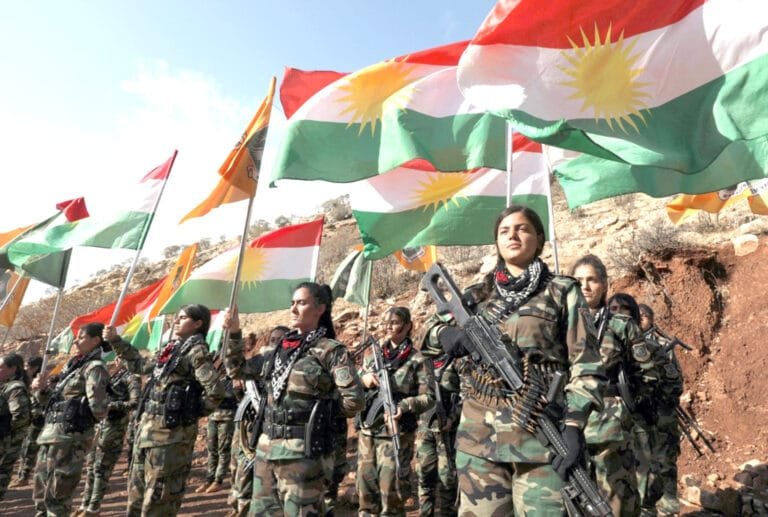
Tehran, Iran – In a dangerous escalation that puts Iraqi Kurdistan in the crosshairs, the Islamic Republic of Iran issued an unprecedented warning to the authorities in Erbil.
It threatened to target all vital installations in the region should any military action be launched by “separatist groups” across the border.
This came in conjunction with provocative statements by US President Donald Trump.
In those statements, he declared his support for Kurdish actions against Tehran.
Tehran: We will turn the region into a target arena
Ali Akbar Ahmadian, the representative of the Supreme Leader’s office in the National Defense Council,
issued a clear threat to expand the scope of Iranian targeting.
Ahmadian stated, “Until now, our strikes have been limited to American bases, the Zionist entity, and separatist groups.
However, if these groups are allowed to exist or infiltrate across the borders,
all facilities in the Kurdistan Region will be targeted extensively as they constitute the enemy’s rear defense line.”
These threats raise concerns about the potential destruction of the region’s infrastructure.
Previously, Iranian strikes had been limited to the headquarters of opposition parties in the mountains and border areas.
Trump sparks controversy: I support the Kurdish offensive
In Washington, US President Donald Trump made a significant political surprise during a telephone interview with Reuters.
During the interview, he confirmed his support for Kurdish actions against the Iranian regime.
When asked whether the United States would provide air cover for the Kurdish offensive,
Trump responded in his usual vague manner: “I can’t tell you that.”
This stance represents a dramatic shift, especially since the White House had previously denied reports that Trump intended to arm the Kurds to attack Iran.
As a result, this opens the door to the possibility of covert US-Kurdish coordination to open a domestic front against Tehran.
Kurdish opposition: We are waiting for the skies to be secured
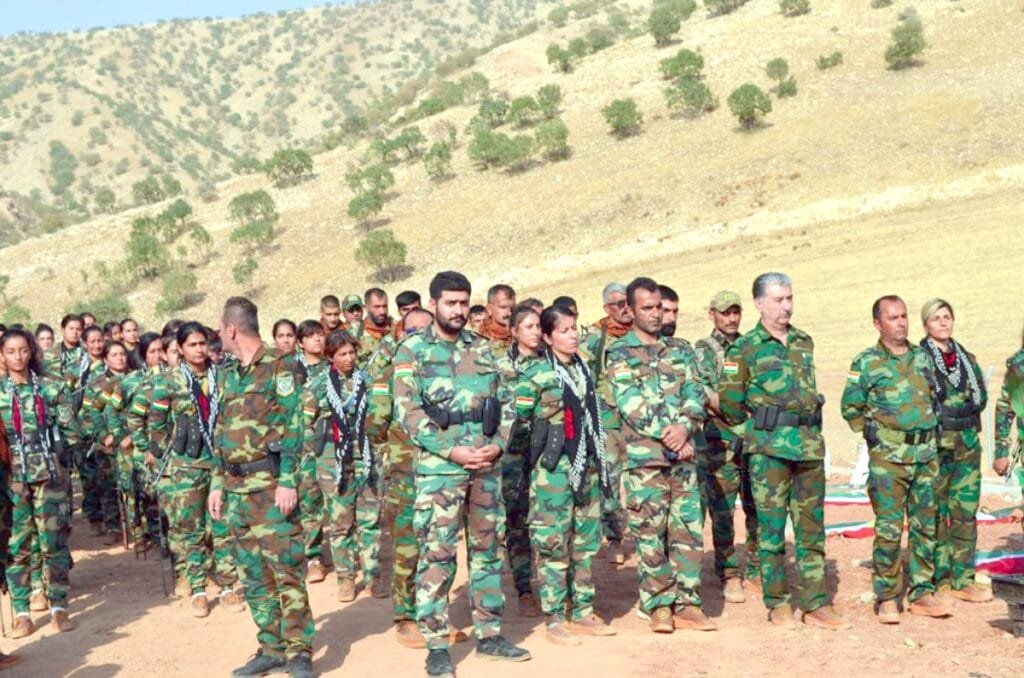
For their part, Iranian Kurdish opposition parties based in northern Iraq denied reports that their forces had already entered Iranian territory.
They described the current movements as “coordinating.”
Hossein Yazdanpanah, a leader of the Kurdistan Freedom Party (PAK),
stated that a coalition of six opposition groups had recently been formed.
However, he conditioned any actual action on American support.
Yazdanpanah said clearly: “Nothing will happen this week; we need American support to pave the way.”
“We cannot move until the skies are safe from enemy threats; moving without a no-fly zone would be suicidal.”
“The regime is extremely violent, and our most advanced weapon is the Kalashnikov,
so we must ensure the destruction of the government’s weapons depots first.”
Kurdistan Region: Between a rock and a hard place
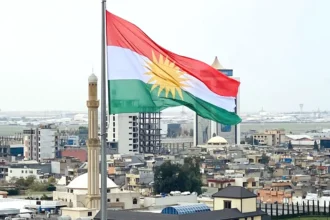
The Kurdistan Region of Iraq finds itself in an unenviable position.
On one hand, it faces Iranian pressure and threats to wipe its infrastructure off the map.
On the other hand, the temptation of American support for the Kurdish opposition looms as a factor that could destabilize the entire region.
Analysts believe that the Kurdish opposition’s demand for a no-fly zone is the true test of the seriousness of Trump’s statements.
If Washington responds, we will be facing a direct and open confrontation that could redraw the map of the Middle East.
But if it backs down, the region will be left alone to face Iranian missiles and drones.