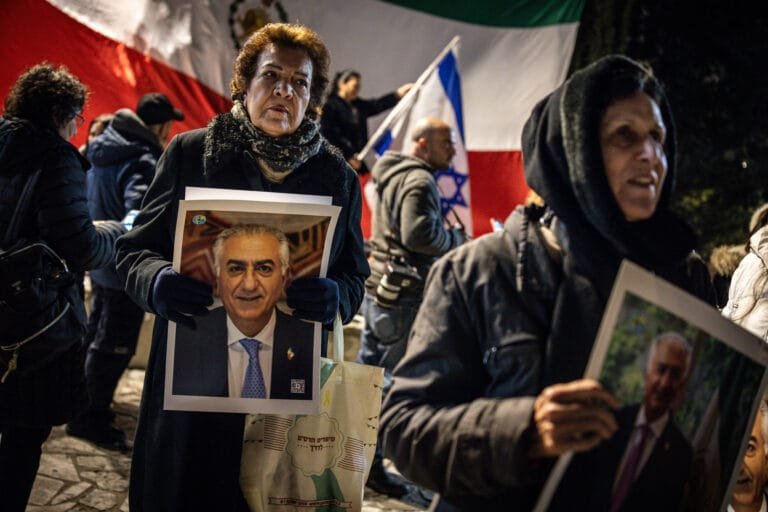
Damascus, Syria – Iran is facing one of the most consequential moments in its modern history. What began as economic discontent has rapidly evolved into a nationwide political crisis, exposing deep structural weaknesses within the Islamic Republic and placing unprecedented pressure on its ruling establishment. As mass protests sweep across the country, the government’s forceful response, combined with worsening economic conditions and growing international scrutiny, has pushed Iran to a historic crossroads whose outcome remains uncertain.
Protests: scale, triggers, and participants
The current wave of unrest erupted in late December 2025, initially triggered by a sharp deterioration in living standards. The collapse of the Iranian rial, soaring inflation, and escalating food and fuel prices created unbearable conditions for large segments of the population. What distinguished this protest movement from earlier episodes was its breadth and persistence. Demonstrations quickly spread across all 31 provinces, encompassing major cities, provincial towns, and economically marginalized regions alike.
Unlike previous protest waves that were often driven by specific social or political grievances, this uprising reflects a broader sense of economic exhaustion. Workers, students, small business owners, retirees, and even former supporters of the system have joined the demonstrations.
Government response: information control and repression
To contain the unrest and control the narrative, the government has imposed extensive internet shutdowns, severely limiting access to social media and independent news sources.
Economic breakdown
At the heart of Iran’s turmoil lies a profound economic breakdown. Years of sanctions, compounded by domestic mismanagement, corruption, and inefficient state control, have hollowed out the economy. The rial’s historic decline has eroded purchasing power, while inflation has pushed millions below the poverty line.
International and regional implications
The unfolding crisis has drawn sharp international attention. Western governments have condemned the violence, while the United States has adopted increasingly confrontational rhetoric, warning Tehran against further repression and the threat of military intervention.
Regionally, Iran’s instability is being closely monitored by neighboring states and rival powers. A weakened Iran could alter regional balances, affect proxy dynamics, and complicate ongoing tensions related to security, energy markets, and geopolitical alliances.
Interview with Dr. Mona Silawi
For this article, I interviewed Dr. Mona Silawi, an Ahwazi human rights researcher from Iran. The views expressed are hers alone.
Human Rights Crackdown and Diplomatic Fallout
Steven Sahiounie (SS): Human rights groups report unlawful use of force and threats of executions, and global condemnation is growing. How are human rights considerations being addressed, and what are the implications for Iran’s international relations?
Mona Silawi (MS): According to the latest reports, or journalistic report being released by Iran International, there has been live ammunition used in the protest, and around 12,000 people have been killed, and thousands and thousands has been arrested. The regime decided to order the death sentence for all the people that has been killed.
Unfortunately, we don’t have a body, or organization that has the executive power to actually force countries to apply human rights. Human rights is beautiful, but it’s only on paper. It has been approved by the United Nations, but what is United Nations? It is actually not united, and not a nation.
Iran is part of human rights declaration. They signed it, but doesn’t mean that they’re going to apply it. That goes for all the countries as well. I don’t see what can we do, because it seems that the international community is really hopeless to what they can do concerning this.
Some countries like US have been used human rights as excuse, but when it comes to actually helping the nations, so many times they have been silent.
Like now, we have 12,000 lives that has been lost. I don’t think it is possible that we can save life and respect human rights in countries like Iran, that are also misusing religion, like the Islamic Republic of Iran.
I’m sure I’m quite emotional because seeing the pictures of 12,000 people being killed, brutally killed, it’s making me so emotional.
Internet Blackout and Power Cuts: Disrupting Communication and Protest Networks
SS: Iran imposed a near-total internet blackout in early January 2026 to limit communication and media coverage. What has been the impact of the Iranian government’s nationwide internet shutdown on domestic communication, protest organization, and the flow of information both inside and outside Iran?
MS: Iran has always an ambition to have a domestic internet that they are copying from China. They’re copying the technology from China. So some Iranian people are using social media applications.
The regime actually uses it to spy on the nation, on the people. But now, the internet is on blackout.
Businessmen, businesses, and families cannot contact each other. They went as far as also cutting power, so there is no electricity, especially at night.
They try to dismantle the network of the protesters, but that’s another indication that the regime is a big trouble, because if it wasn’t for that, they wouldn’t cut off the power as well. The regime has a history of destroying the buildings, killing people for their own goals and purposes.
Death-Toll Disputes, Vandalism Narratives, and Measuring Public Support
SS: Some critics call the numbers of dead being reported on the BBC, for example, as excessive and untrue. Some members of the international community have seen the burning of buildings and cars as vandalism, and not relevant to freedom and democracy aspirations. How can the protesters be taken seriously abroad and domestically? Is there a way to gauge public support inside Iran?
MS: In past executions, the Ayatollah was the judge. He killed so many people. He wasn’t even reading the cases. They said once even he signed his own name to be executed because he wasn’t even reading any names. He was just signing the numbers. He didn’t really care. Once they asked him the same question, “Aren’t you afraid that you executed innocent people?”
He said, “If they were innocent, I just made them go faster to heaven. And if they are guilty, then I did the what must have been done, so I send them to hell.” We are fighting with a regime that it is like that.
They think even if they killed 12,000 people, and let’s imagine there was 10,000 they were innocent, doesn’t matter because life doesn’t have any value for them. They think, okay, this 10,000 that even if they in their own heart they believe that they are innocent, they have gone to heaven. So they don’t have any guilt on their conscious killing thousands and thousands of people.
I guess the most important things is to keep talking about them, because when you don’t talk about the subject, it’s going to die out in the people’s eyes in international community. So the regime can kill people easily. So, it is really important to have the media coverage.
Some people in the street want the monarch to come back, because some people say the son of the former Shah wants to take power, and he has a good relation with Zionists, and he is a puppet of Israel. So, he wants to come back and rule the country and make it a puppet of Israel in the region. But, there’s a lot of people that do not supporting him.
He may have some supporters, but that doesn’t mean that he’s going to rule the country. We shouldn’t say that these people are being organized by Mossad or CIA, because it’s impossible that the CIA can have thousands and thousands of people, and mobilizing them like this in the street.
The international community seems hopeless in the face of Iran’s human rights abuses, including the killing of protesters, internet blackouts, and a history of violence, while the regime justifies its actions through religious beliefs and a lack of value for human life, making media coverage crucial to prevent the issue from fading from international attention.